Emergency Floodwater Extraction
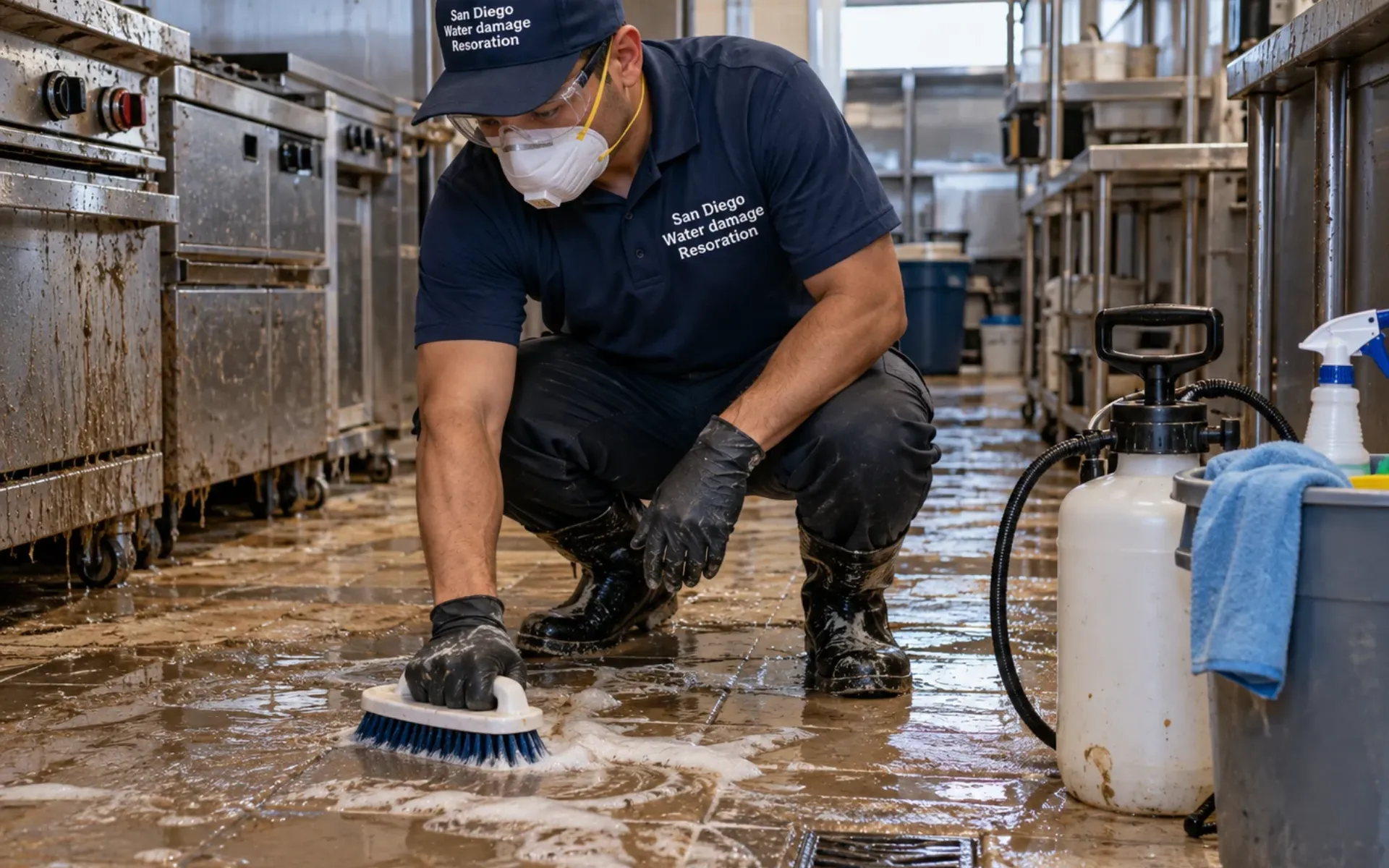
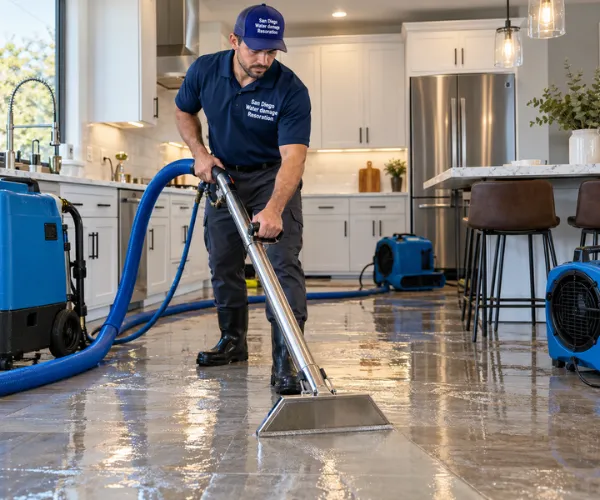
We remove standing and pooled water using pumps and extraction equipment to stop further soaking of flooring, walls, and contents. Contaminated water is handled with containment and protective equipment.
San Diego Water Damage provides flood damage restoration for homes and businesses in San Diego, California. We remove floodwater, clean and sanitize affected areas, dry the structure, and coordinate repairs, so you know what's damaged, what can be saved, and what happens next.
Our service covers every stage of flood recovery, from the first water extraction to repair coordination. The scope depends on the water source, contamination, and materials involved.
We remove standing and pooled water using pumps and extraction equipment to stop further soaking of flooring, walls, and contents. Contaminated water is handled with containment and protective equipment.
Air movement equipment and dehumidifiers pull moisture out of drywall, framing, and subfloors. Drying is complete when materials reach appropriate drying goals, not on a fixed schedule.
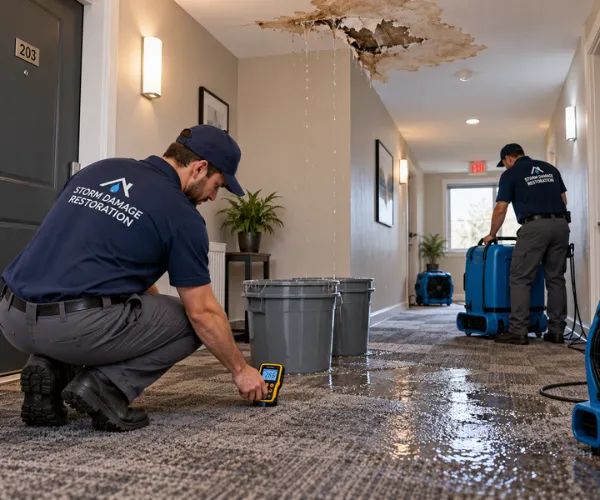
We use moisture meters to find moisture beyond what's visible and record readings throughout the project. The readings guide where equipment goes and when materials are dry.
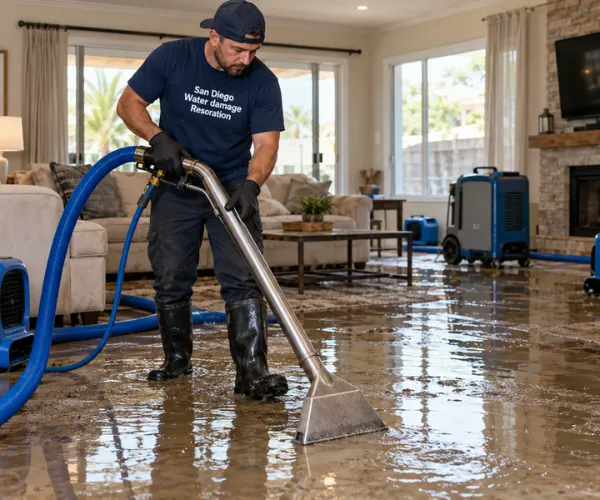
We clear silt, debris, and wet materials that can't be saved, then clean and sanitize surfaces exposed to floodwater. Lingering odors are addressed at the source, not covered up.
You get 25 years of restoration experience, a moisture-reading-based process, and clear communication from the first call to the final review.
25 years of experience and many successfully completed projects.
Drying decisions follow moisture readings, not guesswork.
We look inside walls, ceilings, and floors, not just at visible water.
We explain what we find, what we recommend, and why.
We document the damage and the work performed.
We protect occupied spaces and belongings as we work.
Heavy winter rain can push water in through doors, garage openings, foundations, and window wells. Stormwater often carries soil and debris, so we assess contamination first.
A burst pipe, failed supply line, water heater leak, slab leak, or overflowing washing machine can flood a room fast. Water that starts clean can become more contaminated the longer it sits.
Sewage backups and floodwater from outside are treated as contaminated Category 3 water that can carry bacteria. Keep people and pets out and don't try to clean it yourself.
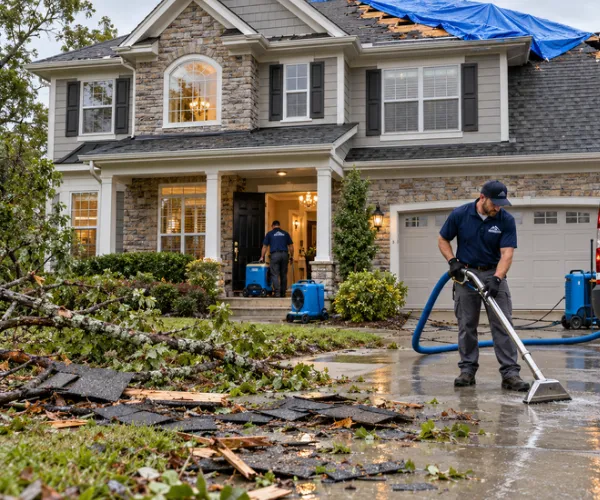
A damaged roof or blocked drainage can let rain into attics, ceilings, and walls. Water often travels before it shows, so we check for moisture beyond the visible stain.
Our process has six steps, and each one builds on the last. You'll know what's happening and what comes next at every stage.
We find the water source, check for safety hazards, evaluate contamination, and use moisture meters to locate moisture beyond what's visible. Then we explain our findings and the plan.
We remove standing water and set up containment when contamination is a concern, to keep it from spreading to dry areas of the property.
Porous materials soaked by contaminated floodwater, such as carpet padding, saturated drywall, and insulation, are often removed so the structure can dry. Tile, concrete, and some solid wood can often be cleaned and kept.
We set up air movers and dehumidifiers, then take moisture readings and adjust the equipment until materials reach appropriate drying goals.
We clean and sanitize affected surfaces, address odors, and treat areas exposed to contaminated water so the space is ready for repairs.
We review remaining damage and recommended repairs with you and document the work performed. That documentation can support your insurance conversations, though we can't guarantee coverage or a specific outcome.
Carpet, padding, hardwood, and subfloors absorb water quickly. We extract the water, then dry what can be saved and identify what has to be replaced.
Water wicks up drywall and soaks into insulation inside wall cavities. We check behind the surface with moisture meters before deciding what stays.
Water from roof leaks or an upstairs plumbing failure can saturate ceiling drywall and insulation. We find the extent of the moisture and dry or remove affected materials.
Cabinets, flooring, and plumbing walls are common flood areas. We assess cabinetry and subfloors for moisture and coordinate repairs once they're dry.
Lower areas often collect water first and dry slowly. We remove standing water, clear debris, and dry the structure to limit lingering moisture and odors.
Water travels between units, floors, and shared walls. We help owners, property managers, and associations understand the full extent of the damage.
We restore flood-damaged homes, condominiums, and commercial properties in San Diego. The process is the same, but we adapt the work to your property.
We protect occupied spaces and belongings, and document damage for your insurance claim.
We coordinate the work around your operations as much as the damage allows.
Water travels between units and shared walls, so we help property managers and associations understand the full extent of the damage.
Flood damage restoration typically costs a few thousand dollars for a contained flood and considerably more for large or contaminated losses. Your price depends on the amount of water, the water category, and the materials affected.
National data from Angi puts typical water damage restoration at $1,383 to $6,369, with extraction and drying for Category 3 water at about $7.50 per square foot. A San Diego-area estimate from HomeYou lists flood cleanup at roughly $3,500 to $4,000 for about 215 square feet. These are estimates, not quotes.
Call (619) 320-9986Contact us to discuss your property damage concerns and the next steps for service.
Call (619) 320-9986As soon as it's safe, ideally so wet materials begin drying within 24 to 48 hours. If the water may be contaminated or there are electrical hazards, wait for professional guidance before entering.
Drying often takes several days, but timelines vary with the amount of water, the materials involved, and site conditions. Repairs add more time. We base completion on moisture readings, so we need to assess your property for a reliable estimate.
Sometimes. Hard, nonporous items and some solid wood and tile can often be cleaned and dried. Carpet padding, saturated drywall, upholstered items, and particleboard furniture soaked by floodwater are often not salvageable.
Yes. It can carry sewage, bacteria, and chemicals, and it often creates electrical and slip hazards. Avoid contact until it's assessed, and wear waterproof boots and gloves if you must enter.
Flood cleanup removes floodwater, mud, debris, and contaminated materials. Water damage restoration is broader, covering any unwanted water plus drying and repairs. Most floods need both.
Tell us what happened, where the water is coming from, and which areas are affected. We can discuss the next practical step.