Mold Remediation

Mold Removal and Remediation in San Diego, CA

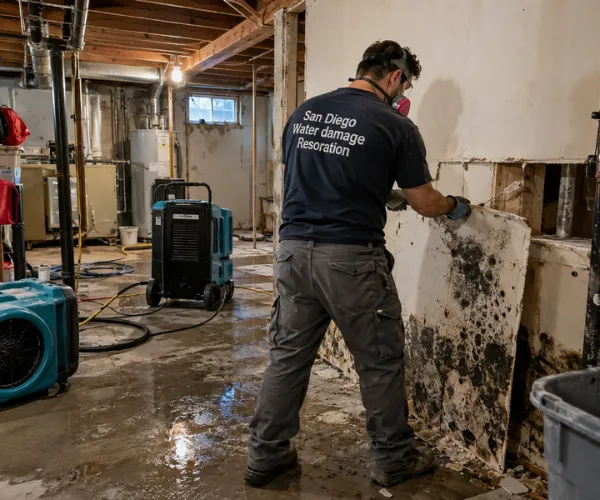
Mold removal and remediation in San Diego, CA starts with finding the moisture behind the mold. Remediation removes contaminated materials, cleans affected areas, and corrects the conditions that let mold grow. San Diego Water Damage helps homeowners, landlords, property managers, and commercial property owners with mold that follows plumbing leaks, roof leaks, high humidity, or water damage. Mold often grows out of sight, inside walls, attics, and crawl spaces. Wiping away the visible patch rarely solves the problem. A prompt assessment shows how far it has spread and what work makes sense. Call [Phone Number] for mold removal help, or request a mold inspection.

What Mold Removal and Remediation Services Do We Offer in San Diego?

Mold shows up in different places and for different reasons, so the work changes from job to job. Our team has spent 25 years working on water losses, and mold often follows water. Here are the mold problems we handle.

Mold Inspection and Assessment

Mold Inspection and Assessment

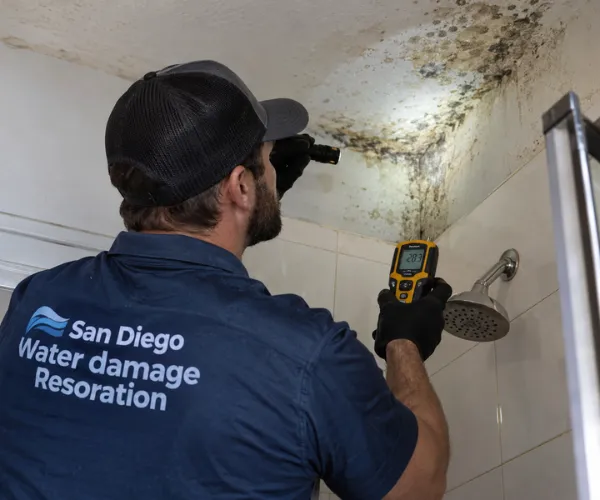
We start with a visual check and moisture readings to find affected materials and the water source. Assessment shows the scope of the problem before any removal begins. Air sampling isn't needed for every mold problem. If specialized testing helps, we'll explain why. You get findings in plain language and a clear scope of recommended work.

Residential Mold Removal

Residential Mold Removal

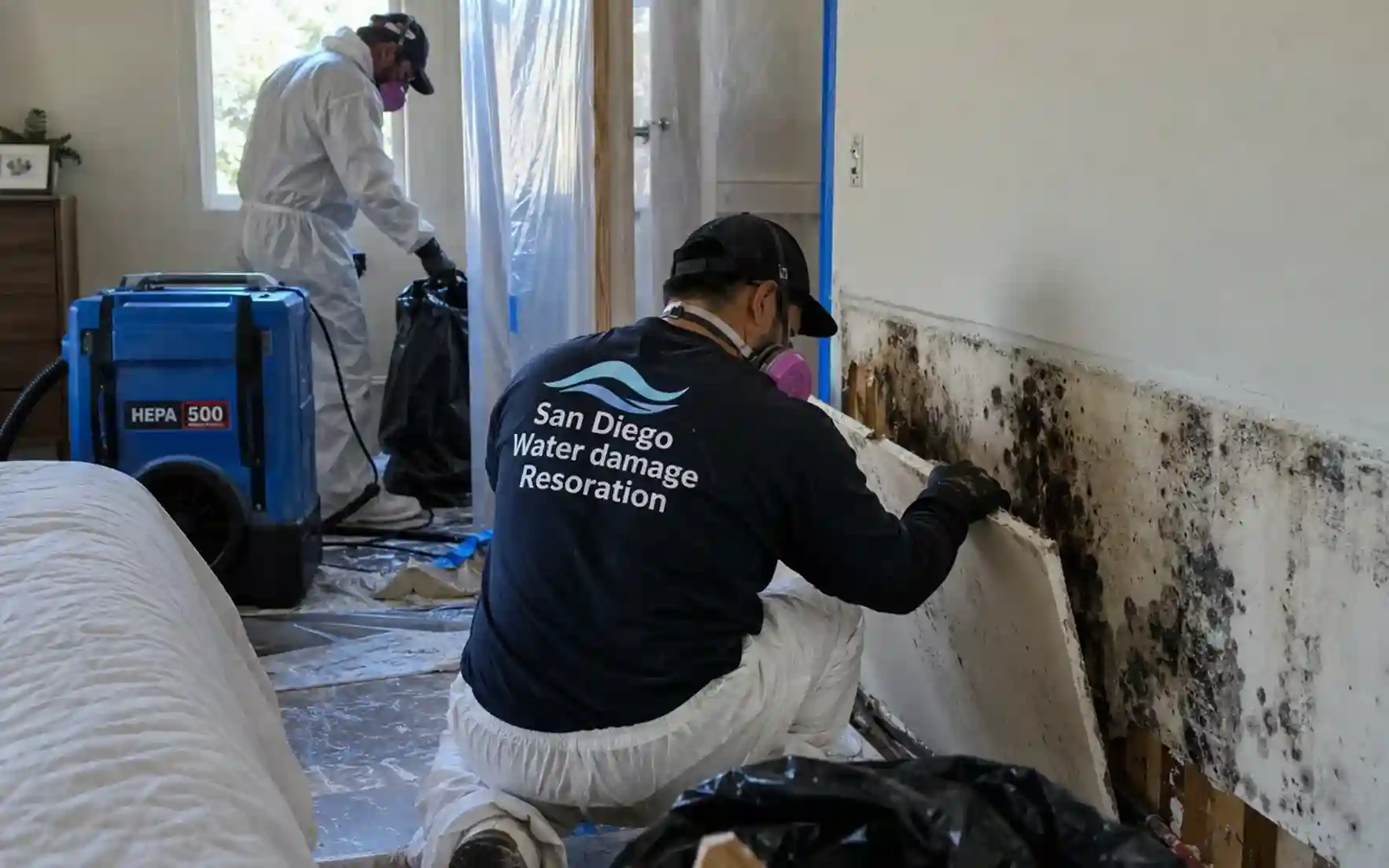
We remove mold from houses, condominiums, and apartments. That can include drywall, ceilings, flooring, cabinets, and framing, depending on how far growth has spread and how wet each material is. Dark or black mold gets the same careful approach, since color alone doesn't identify the species or how harmful it is. We protect unaffected rooms with containment while we work.

Commercial Mold Remediation

Commercial Mold Remediation

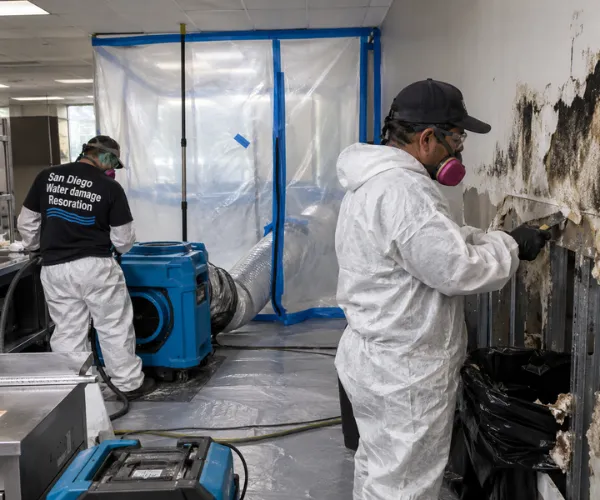
Offices, retail spaces, and multi-unit buildings can't always close for long. We plan work-area containment to limit disruption and protect occupied spaces while mold-affected materials are removed and cleaned. Water often travels between units and floors, so we check adjoining areas for moisture too. We document findings and recommended work for property managers and owners.

Mold Removal After Water Damage

Mold Removal After Water Damage

Water damage that isn't dried properly can support mold growth in drywall, carpet, and insulation. Because we also handle water extraction and structural drying, mold remediation can fit into the same restoration plan. We dry what can be saved, remove what can't, and outline the repairs needed before reconstruction.

Why Choose San Diego Water Damage for Mold Remediation?

These are the practical reasons property owners choose San Diego Water Damage when mold follows a leak or ongoing dampness.

Experienced Mold Remediation Professionals

Our team has spent 25 years working on water losses, and mold often follows water. That background helps us trace moisture, judge which materials are affected, and plan remediation steps that fit the building.

Detailed Moisture Detection and Mold Assessment

We use moisture meters and a close look at affected materials to find where water went. Those findings guide what gets cleaned, what gets removed, and what needs drying before repairs begin.

Safe Containment and Mold Removal Procedures

Containment barriers help keep mold spores from spreading to clean rooms. We protect unaffected areas, then remove or clean mold-affected materials based on their condition and the extent of growth.

Clear Communication and Restoration Planning

You get findings in plain language, a clear scope of recommended work, and documentation of what we found and did. That makes repair planning, and any conversation with your insurer, easier.

What Causes Mold Growth in San Diego Homes?

Plumbing Leaks and Burst Pipes

Leaking supply lines, drains, and burst pipes can soak walls, floors, and cabinets. Water often runs behind surfaces before anyone notices. If the area stays wet, mold may begin to grow, sometimes within 24 to 48 hours under the right conditions.

Roof Leaks and Water Intrusion

Water coming through roofing, flashing, or windows can wet attics, ceilings, and interior walls. Slow leaks are easy to miss until stains or musty odors appear, and wood sheathing and insulation can stay damp long after the rain stops.

Poor Ventilation, Humidity, and Condensation

Rooms without enough airflow trap moisture from showers, cooking, and breathing. Warm, humid air meeting cool surfaces leaves moisture behind in bathrooms and crawl spaces. Local weather alone doesn't cause mold. Lingering moisture does.

Flooding and Unresolved Water Damage

Carpet, drywall, and insulation hold water long after a flood or leak. If these materials aren't dried promptly, they can support mold growth even when the surface looks dry. Water damage and mold often show up as one problem.

Our Mold Remediation Process: From Inspection to Restoration

Every mold job follows the same basic workflow, but the details depend on the type of contamination and the building. Assessment finds the scope, remediation removes the problem, and reconstruction replaces what was removed. Industry guidance, such as the ANSI/IICRC S520 standard, treats moisture control as central to mold remediation. Some jobs need extra steps.

Step 1

Inspect Mold Growth and Identify Moisture Sources

We look for visible growth, damp materials, and the source of the water. Moisture readings help us find concealed conditions behind walls and under floors, so the plan covers more than the spot you can see. We also note which building materials are affected, since that guides what can be cleaned and what must come out.

Step 2

Establish Containment and Safety Measures

We set up containment barriers and, when the job calls for it, air filtration devices and negative air pressure. Technicians wear personal protective equipment. These steps help keep mold spores and other contaminants from reaching clean areas of the building while the work is underway.

Step 3

Remove Mold-Contaminated Materials

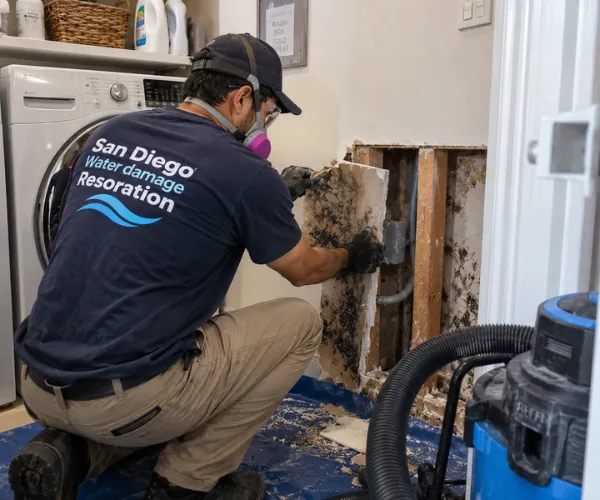
Porous materials like drywall, insulation, carpet, and ceiling tiles often can't be cleaned well once mold grows into them. We remove affected sections based on their condition and the extent of growth, and we handle the debris in a way that limits spread to other rooms.

Step 4

Clean and Treat Affected Surfaces

We clean wood framing and other solid surfaces with HEPA vacuuming and physical removal of contamination, then suitable surface cleaning. Spraying chemicals or painting over mold isn't remediation. It leaves the cause in place, and the mold can return.

Step 5

Address Moisture and Dry Affected Materials

Mold can return when moisture does. We help identify the leak, humidity, or airflow problem, and we dry salvageable materials with air movers and dehumidifiers. Plumbing or roof repairs may need a separate contractor, and we'll tell you when that's the case.

Step 6

Review Remediation Results and Repair Needs

We review the cleaned and dried areas with you and document what was done. Post-remediation verification may be appropriate in some cases. We outline remaining repairs, such as replacing drywall, insulation, or flooring. No process removes every mold spore from indoor air, so the goal is normal indoor conditions.

Common Places and Signs of Mold in San Diego Properties

Walls and Ceilings

Fuzzy spots, speckles, or patches on damp walls and ceilings are the clearest sign. Brown or yellow stains show that water reached the material. A stain isn't proof of mold, but it marks a spot worth checking.

Attics

Roof leaks, condensation, and poor ventilation can leave wood sheathing and framing damp. Look for dark staining on the underside of the roof deck or damp, discolored insulation. Attic mold can grow where nobody looks.

Bathrooms and Kitchens

Showers, sinks, cabinets, and plumbing fixtures often stay damp in enclosed spaces. Recurring dark spots near windows, under sinks, or along tile lines often point to a slow leak or recurring dampness.

Crawl Spaces and Basements

Damp framing, subflooring, and stored materials can support growth below the home. Drainage problems and high humidity are common contributors. Limited access can affect how remediation is planned and how long it takes.

Flooring and Subfloors

Water can stay trapped under carpet, wood, and vinyl while the surface looks fine. Warping, soft spots, and musty odors are clues. A moisture meter reading can reveal what you can't see.

Cabinets and Window Frames

Condensation on window frames and leaks under sinks can keep surfaces wet. Swollen cabinet bases and peeling paint near these spots suggest moisture. Odor alone doesn't confirm mold, so it's worth checking for the source.

How Much Does Mold Removal and Remediation Cost in San Diego?

Mold removal costs vary with the size of the affected area, where it is, how complex the work is, and how far contamination has spread. A firm number requires an assessment of your property. Request a mold removal cost assessment and we'll walk you through the options.

What Factors Affect Mold Remediation Costs?

  • Affected square footage and the extent of mold growth
  • Amount of contaminated material that must be removed
  • Containment requirements during remediation
  • Accessibility of affected areas, including walls and attics
  • Moisture source identification and correction
  • Cleaning, equipment, and labor requirements
  • Repair and reconstruction work after remediation
Estimate Information

Small-area mold removal and extensive mold remediation can involve very different scopes of work. A small, accessible patch may need limited cleaning or material removal. Mold growth inside wall cavities, attics, or across several rooms may require additional containment, material removal, and time. The scope of remediation, not just the visible surface area, determines the work. Remediation and reconstruction are often priced separately.

Insurance: Insurance coverage depends on your policy, the cause of damage, any mold endorsements, coverage limits, and exclusions. Mold that follows a sudden covered event may be treated differently than mold caused by long-term leaks. Check with your insurer to understand your coverage before filing a claim.

Call (619) 320-9986
Our Mold Removal and Remediation Service Areas Near San Diego

San Diego Water Damage provides mold removal and remediation services in San Diego, California. Whether it's a roof leak or a damp bathroom, we start by identifying the moisture source and assessing the affected areas. If you're outside central San Diego, call (619) 320-9986 to confirm service availability before scheduling an assessment.

Property Types We Serve

Residential Homes

Condominiums

Apartments

Rental Properties

Commercial Buildings

Multi-Unit Properties

Frequently Asked Questions

Common questions

Frequently Asked Questions

How much does mold removal and remediation cost in San Diego, CA?

It depends on the size of the affected area, how much material must be removed, containment needs, access, and moisture repairs. Growth inside wall cavities or across several rooms costs more than a small, accessible patch. We can't quote a number without assessing the property. Insurance coverage depends on your policy and the cause of damage, so call your insurer early.

Can I remove mold myself or should I hire a professional?

Small problems on hard, non-porous surfaces may be manageable with careful cleaning and fixing the moisture source. Wear gloves, eye protection, and a respirator. Mold can trigger allergy symptoms and asthma flare-ups, according to the EPA and CDC. Call a professional when growth is extensive, hidden, recurring, or tied to contaminated water. Don't cut into walls or disturb large growth yourself.

Can mold come back after professional removal?

It can, if moisture returns. A new leak, high humidity, or poor ventilation can let mold come back, and no one can guarantee it won't. Fix leaks quickly, dry wet materials within 24 to 48 hours, use exhaust fans, and keep indoor humidity between 30 and 50 percent when possible.

Is black mold more dangerous than other types of mold?

Not necessarily. Color alone doesn't identify a species or show how harmful it is. Any indoor mold growth should be assessed and removed with appropriate precautions. If you have symptoms or health concerns, talk to a doctor.

How long does mold remediation usually take?

It varies with the scope of work. Small, accessible areas take less time than widespread or concealed growth, and containment, material removal, drying, and repairs all add time. A realistic estimate needs an assessment, so we don't promise a completion date in advance.

Do I need to leave my home during mold remediation?

Sometimes. It depends on the containment used, how extensive the contamination is, and safety conditions. We'll tell you what's practical after assessing the property. People with asthma, allergies, or weakened immune systems may want to stay elsewhere during the work.

Need help with water damage?

Request a restoration assessment

Tell us what happened, where the water is coming from, and which areas are affected. We can discuss the next practical step.