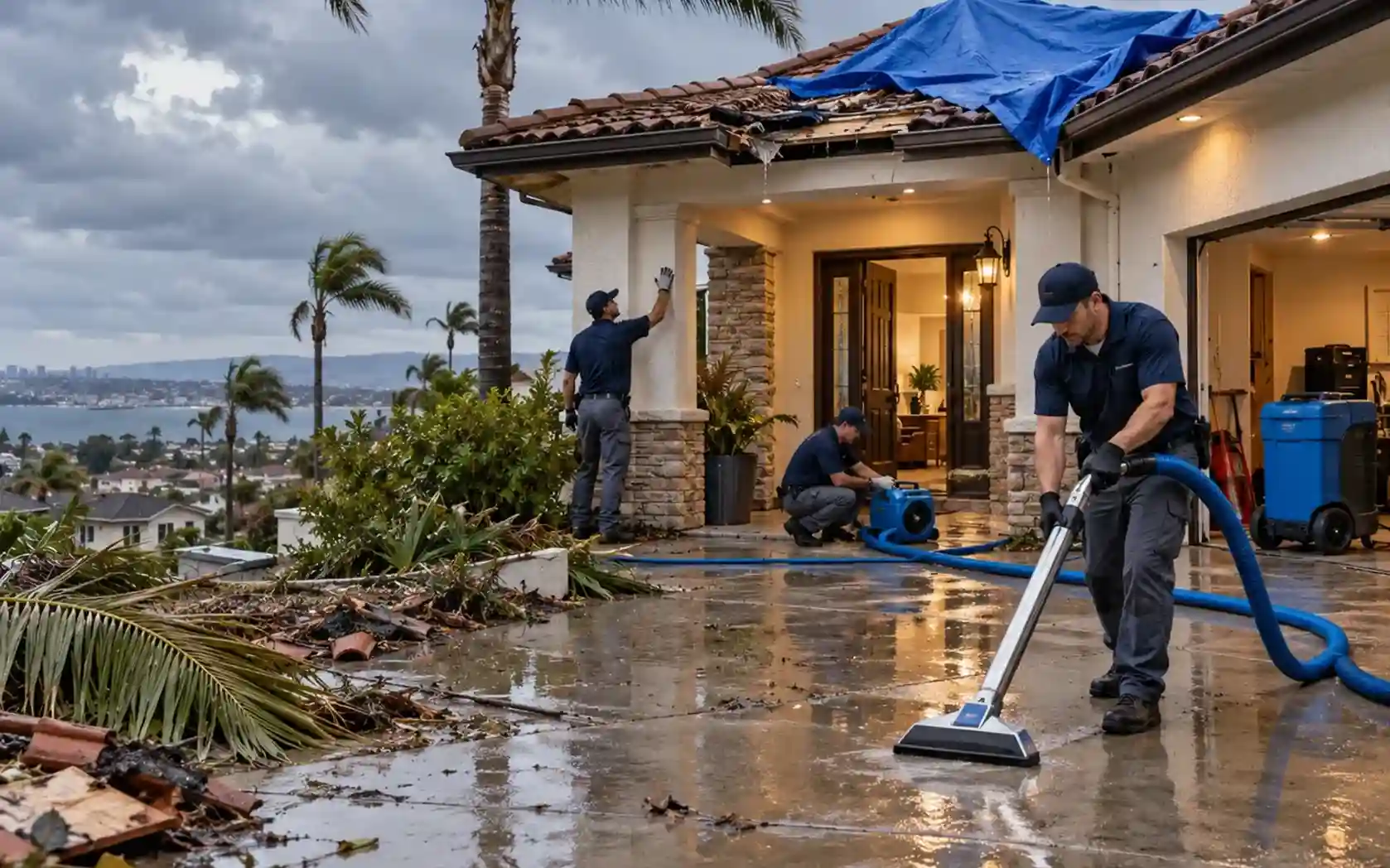
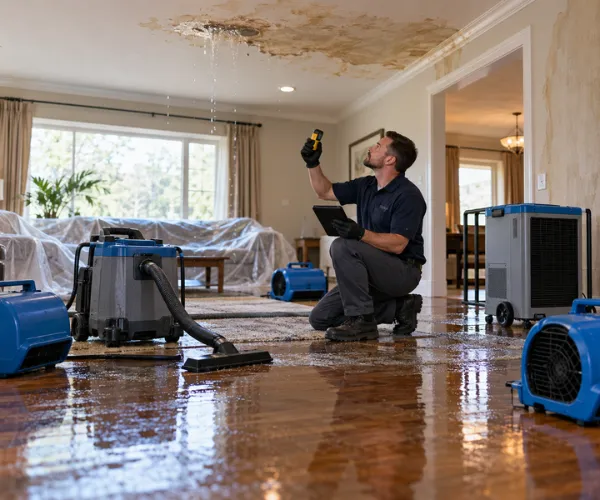
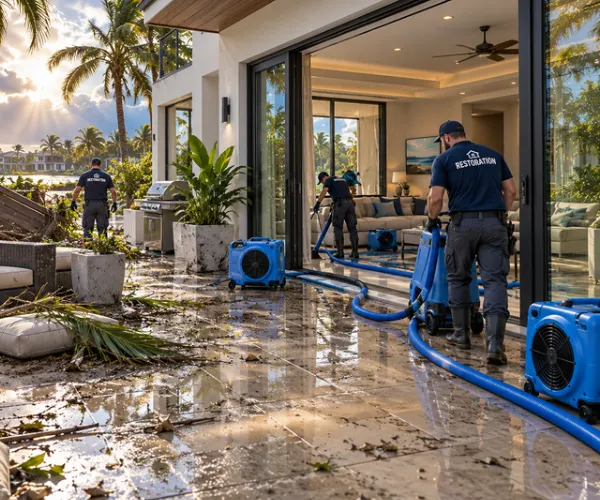
Storm damage restoration in San Diego, CA covers the cleanup, water removal, drying, and repair planning needed after wind, heavy rain, or flooding damages a property. San Diego Water Damage helps homeowners, landlords, and businesses recover from water that enters through storm-damaged roofs, windows, doors, and failed drainage. We assess what the storm affected, remove standing water, and dry wet building materials, then explain which materials can be saved and which need replacement. Where a roof, window, or opening needs temporary weather protection, we coordinate with qualified providers so more rain doesn't undo the drying work. Call us or request a storm damage assessment, and we'll explain what your property needs next.
What Storm Damage Restoration Services Do We Offer in San Diego?
Storm recovery usually involves several services working in sequence, from emergency cleanup to final repairs. Here are the services involved in that process.
Emergency Storm Damage Cleanup
Emergency storm damage cleanup removes debris and standing water safely, assesses water intrusion, and prepares the property for drying and repair. Cleanup comes first because debris and wet materials can hide damage and slow every later step.
Wind Damage Restoration
Wind can lift roofing, break windows, tear siding, and open the building to rain. Restoration addresses the resulting water intrusion and damaged materials, then coordinates repairs to the roof, exterior, and other components with qualified providers.
Roof Leak and Water Damage Restoration
A storm-damaged roof can let water into attics, insulation, ceilings, and walls, often far from the opening. We trace the moisture, dry affected materials, and remove those that stayed wet too long to restore.
Flood and Rainwater Damage Cleanup
Heavy rain can push water through doors, garage openings, and foundations or overwhelm drainage. We remove the water, check for contamination, and assess flooring and wall materials, since stormwater may carry soil and contaminants.
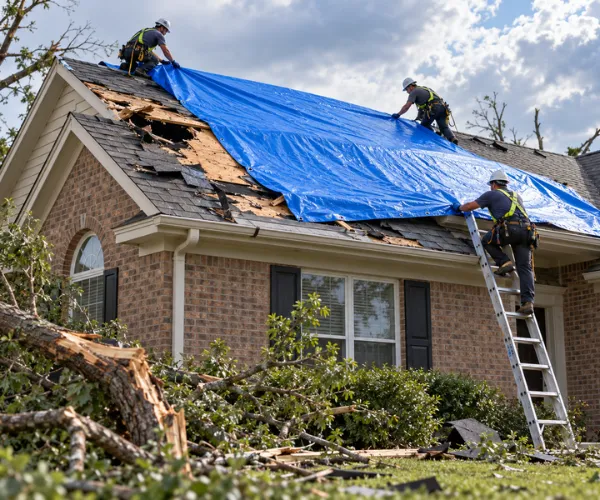
Emergency Roof Tarping
Roof tarping is temporary protection that keeps rain out of a damaged roof until repairs happen. It involves working at height, so qualified roofing professionals should install it, and we can coordinate with them.
Board-Up and Property Protection
Board-up temporarily covers broken windows, damaged doors, and other openings to keep out rain, wind, and debris. A qualified provider typically installs it, and we coordinate it with the water removal and drying schedule.
Storm Water Extraction
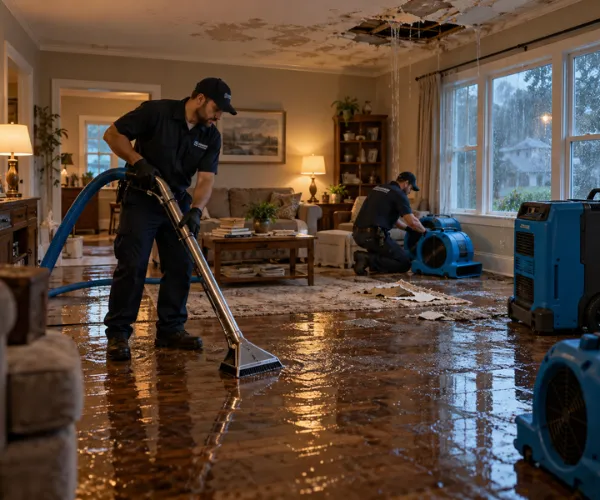
Storm water extraction removes accessible standing water with pumps and extraction equipment. It comes before drying because dehumidifiers and air movers work poorly against pooled water, and extraction limits how far moisture wicks into materials.
Structural Drying and Dehumidification
After extraction, we use air movers and dehumidifiers to dry building materials, with moisture meters guiding the work. Drying continues until materials reach appropriate drying goals, which depend on the materials, not a calendar.
Storm-Damaged Property Repairs
Once the structure is dry, damaged drywall, flooring, insulation, ceilings, and other components are repaired or replaced as needed. We coordinate repairs and explain the scope; larger reconstruction may involve other licensed contractors.
Why Choose San Diego Water Damage for Storm Damage Restoration?
A well-organized restoration starts with a clear assessment, steady communication, and drying decisions based on measurements. Here's what that looks like.
With 25 years of restoration experience, our team understands how wind opens a building to rain, how moisture travels through materials, and when a damaged component is safer to replace than dry.
Thorough Storm Damage Inspection and Assessment
We evaluate visible storm damage, check for hidden moisture behind surfaces, identify affected materials, and note safety concerns, so the plan reflects the whole property, not only what's easy to see.
Professional Equipment and Restoration Methods
Depending on the loss, we use extraction equipment, moisture meters, dehumidifiers, and air movers, plus other detection tools such as thermal imaging when needed, to remove water and dry materials to measured goals.
Clear Communication and Insurance Documentation
We explain the restoration plan in plain language and document the damage and the work performed. That information can support your insurance conversations, though we can't predict or guarantee coverage.
Our Storm Damage Restoration Process: From Inspection to Recovery
Restoration after a storm follows a sequence, with each step protecting the one after it. The scope changes with the damage, but the order stays similar.
Step 1
Step 1 – Inspect the Property and Assess Storm Damage
We assess damaged materials, water intrusion, storm-related hazards, and affected areas, using moisture meters to find moisture beyond what's visible. Then we explain what we found and recommend a plan.
Step 2
Step 2 – Secure the Property and Prevent Further Damage
Where it's safe and appropriate, temporary protection keeps more rain and debris out. Roof tarping and board-up are handled by qualified providers, and we coordinate timing so drying isn't undone.
Step 3
Step 3 – Remove Standing Water and Storm Debris
We remove accessible standing water with extraction equipment and clear debris from affected areas, using precautions when the water may be contaminated. Early removal limits further soaking of flooring and walls.
Step 4
Step 4 – Dry and Monitor Affected Building Materials
We set up air movers and dehumidifiers and track moisture readings over time. Drying ends when each material reaches its drying goal, not after a fixed number of days. Monitoring catches damp spots early.
Step 5
Step 5 – Clean and Restore Damaged Areas
We clean salvageable materials and evaluate components that must be removed, such as saturated drywall or insulation. Cleaning prepares the space for repairs and addresses lingering residue and odors. Removal also opens concealed areas to airflow.
Step 6
Step 6 – Review Repairs and Reconstruction Needs
We review documentation and the remaining damage with you, then outline repair needs, from drywall and flooring to roofing and structural items handled with other contractors. Some materials may not be restorable.
Residential and Commercial Storm Damage Restoration in San Diego
Storm damage affects different property types differently, so the restoration approach changes with how the building is used and occupied.
Residential Storm Damage Restoration
Home restoration focuses on interior water intrusion from roofs, windows, and drainage, along with wet drywall, flooring, and belongings. We protect occupied spaces, assess what can be dried or cleaned, and explain which materials need replacement.
Commercial Storm Damage Restoration
Offices, retail buildings, and other commercial properties need a plan that considers access, tenants, and operations. We assess affected areas, prioritize water removal and drying, and coordinate around business needs and building management where possible.
Storm Damage Cleanup for Apartments and Condominiums
In multi-unit buildings, water can travel through shared walls, floors, and ceilings into neighboring units. We help property managers and associations identify affected units and common areas and coordinate restoration across them. Coordinating early keeps one unit's leak from undoing another's drying.
How Much Does Storm Damage Restoration Cost in San Diego?
Storm damage restoration costs vary with the extent of damage, the materials affected, and the work required. A property assessment is the only reliable way to scope the work and estimate its cost.
What Factors Affect Storm Damage Restoration Costs?
Extent of property damage
Volume of water and number of affected areas
Roof and structural damage
Equipment and labor requirements
Removal of damaged materials
Structural drying and dehumidification requirements
Repairs and reconstruction needed afterward
Roof and structural repairs, typically priced separately from water removal and drying
Estimate Information
Minor storm damage and extensive property restoration can involve significantly different costs. Limited rainwater intrusion in one room generally costs less than a storm that damages roofing, ceilings, flooring, and framing. Angi's national data lists typical water damage restoration costs between $1,383 and $6,369. Extensive storm repairs can exceed that range. These figures are general estimates, not a quote for your property.
Insurance: Homeowners insurance coverage for storm damage depends on policy terms, deductibles, exclusions, and the cause of loss. Wind damage and rain entering through a storm-damaged roof are often covered, while flooding from outside water usually requires separate flood insurance. Review your policy and contact your insurer to confirm applicable coverage.
Our Storm Damage Restoration Service Areas Near San Diego
San Diego Water Damage provides storm damage restoration in San Diego, California and Chula Vista, CA, El Cajon, CA, La Mesa, CA, Santee, CA, Coronado, CA, National City, CA, Lemon Grove, CA Imperial Beach, CA and Near cities. Storms don't stop at city lines, and nearby areas can be affected by the same weather. If you're outside central San Diego, call (619) 320-9986 to confirm service availability before scheduling a storm damage assessment. Tell us your address and what happened, and we'll confirm whether we can help.
Frequently Asked Questions About Storm Damage Restoration in San Diego
Common questions
Frequently Asked Questions
How much does storm damage restoration cost in San Diego, CA?
Costs vary with the extent of damage, materials affected, and work required, so they can't be set before an assessment. Water removal and drying are priced separately from roofing and reconstruction.
What should I do first after a storm damages my property?
Prioritize safety. Stay out of unstable or electrically hazardous areas, document damage from safe locations, and call a restoration professional and your insurer. Don't climb onto the roof or handle electrical equipment yourself.
How quickly should storm damage restoration begin?
As soon as it's safe. Standing water and wet materials keep causing damage, and prompt extraction and drying reduce secondary problems like mold. We can't promise a response time, but early assessment helps.
Does homeowners insurance cover storm and wind damage?
Sometimes. Wind damage and rain entering through a storm-damaged roof are often covered, while flooding from outside water usually needs separate flood insurance. Coverage depends on your policy, deductible, exclusions, and cause of loss.
Can heavy rain cause water damage inside my home?
Yes. Rain can enter through roof leaks, damaged flashing, windows, doors, and failed drainage, and it can soak ceilings, insulation, walls, and flooring. Water damage doesn't require a flood to occur.
How long does storm damage restoration usually take?
It varies. Damage severity, water volume, building materials, drying needs, and repairs all affect timing, and drying is guided by moisture readings. Repairs and contractor coordination can extend the project.
Can storm damage lead to mold growth?
It can. Mold needs ongoing moisture, and water trapped in insulation, wall cavities, or flooring can support growth, though it doesn't always develop. Prompt drying and moisture checks reduce the risk.
Do I need emergency roof tarping after a storm?
Often, if the roof is open to rain. Temporary tarping limits further water entry until repairs. Roof work is dangerous, so qualified professionals should do it, not homeowners climbing onto a wet roof.
Can water-damaged drywall and flooring be restored?
Sometimes. It depends on how long materials stayed wet, whether the water was contaminated, and the damage extent. Tile and some solid wood often dry; saturated drywall and padding frequently need replacement.
Should I leave my home after severe storm damage?
Sometimes. Leave if there are structural, electrical, gas, or contamination hazards, or if utilities are compromised. Otherwise, unaffected areas may remain usable. Have a professional assess safety before you return to damaged rooms.
Need help with water damage?
Request a restoration assessment
Tell us what happened, where the water is coming from, and which areas are affected. We can discuss the next practical step.