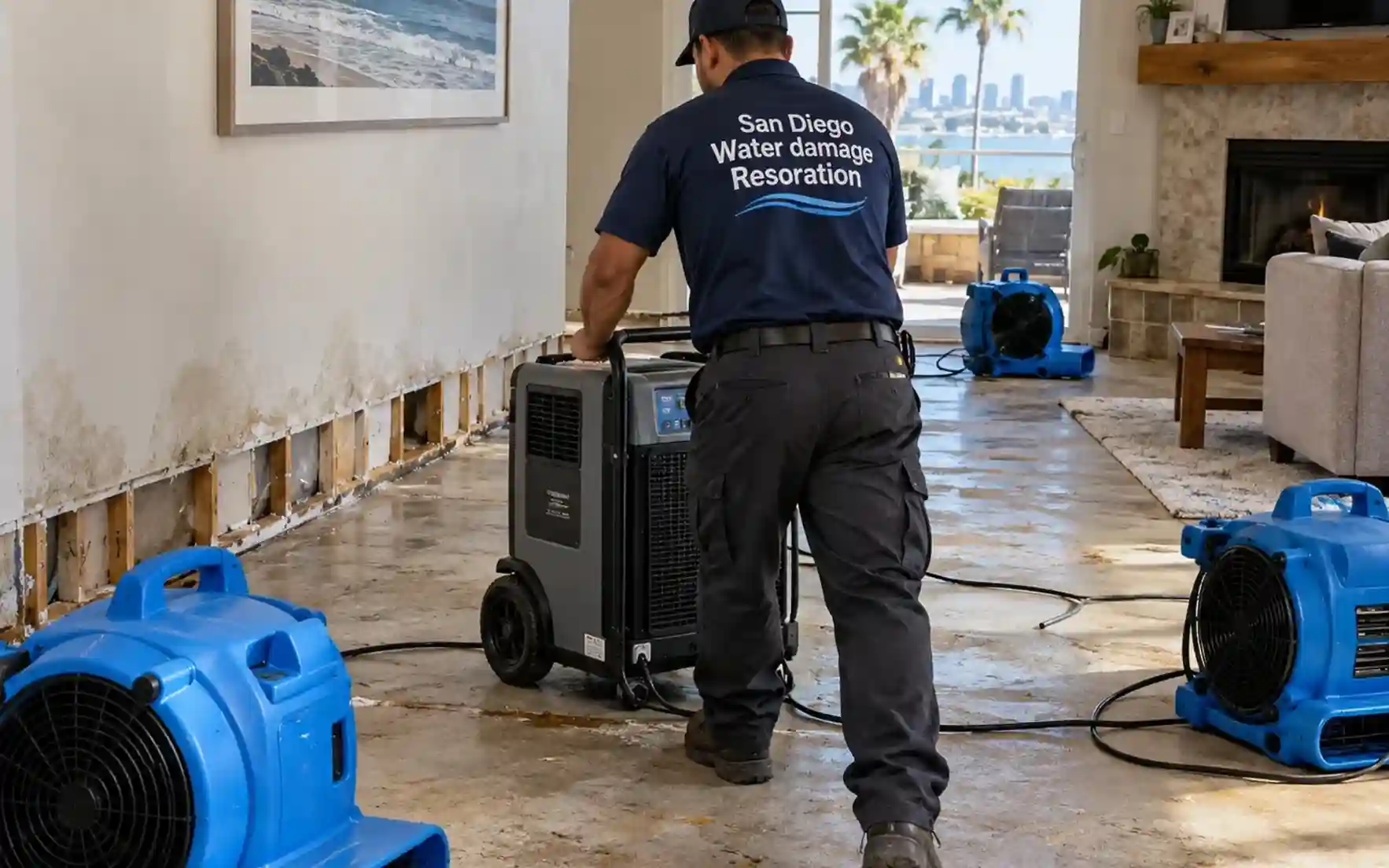
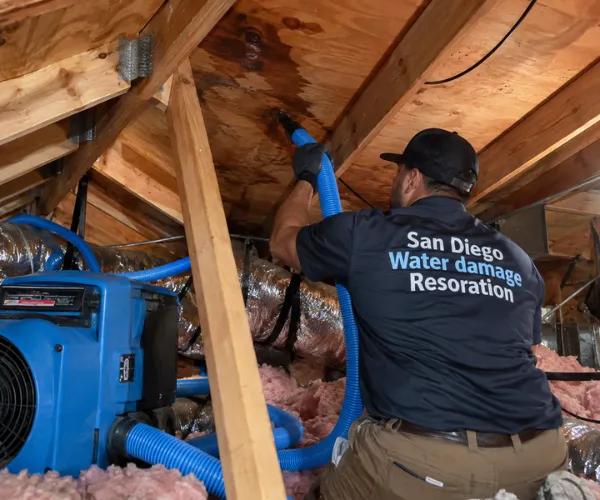
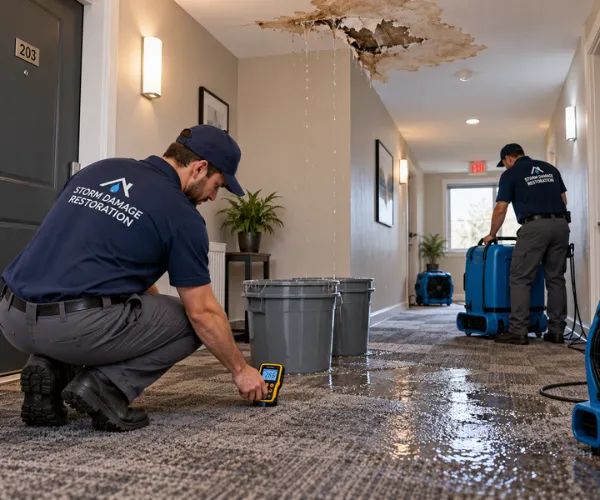
Structural drying in San Diego, CA is the controlled removal of moisture from building materials after water damage, using air movement, dehumidification, and moisture monitoring. San Diego Water Damage helps homes and commercial properties after burst pipes, leaks, flooding, and standing water removal, when moisture is still trapped in drywall, flooring, insulation, and framing. Surfaces can feel dry while wall cavities and subfloors stay wet, so we start by finding where the water traveled. We map moisture, set drying goals for each material, and track readings until the structure reaches them. Call (619) 320-9986 for structural drying help or request a moisture assessment.
What Structural Drying Services Do We Offer in San Diego?
Structural drying is a specialized stage of water damage restoration that removes moisture absorbed into salvageable building materials after standing water is gone. Air movement helps moisture evaporate from surfaces, dehumidification removes it from the air, and moisture monitoring shows whether materials are actually drying. The right equipment and approach depend on the materials involved, whether the water was contaminated, and conditions in the building. These are the drying services we provide.
Drywall and Wall Cavity Drying
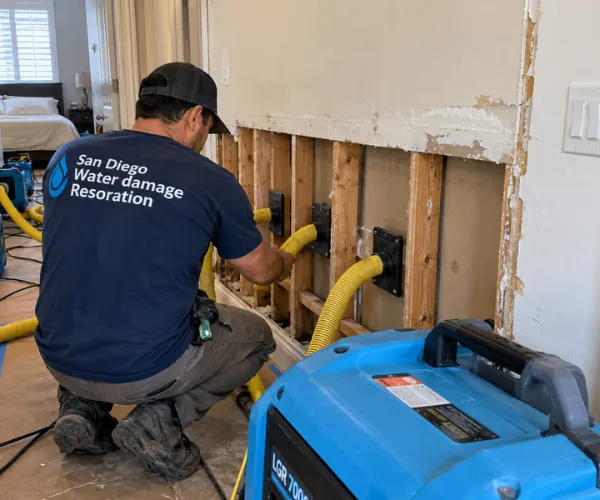
We assess moisture in drywall, insulation, and the studs behind it, then choose a drying approach that can reach wall cavities where surface airflow can't. Contaminated or extensively saturated drywall may need removal instead of drying. Moisture left inside a wall can keep feeding odor and deterioration, so readings guide how long drying continues.
Hardwood Floor and Subfloor Drying
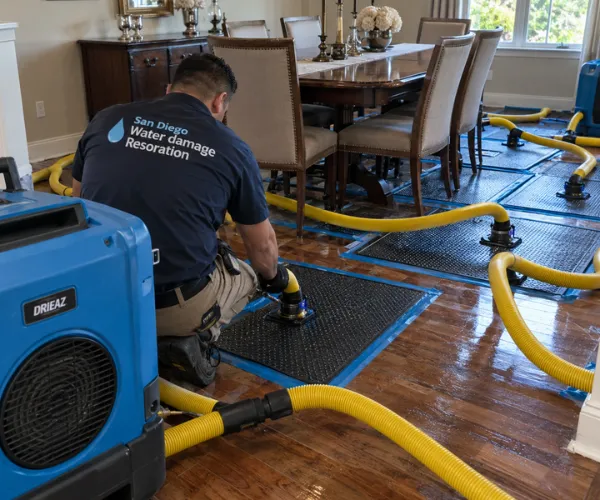
Moisture trapped beneath hardwood and in the subfloor can cause cupping, swelling, and movement. Specialized floor-drying methods may be used where appropriate, but we can't guarantee every floor can be saved. Wood changes slowly, so readings taken over time show whether the floor is actually stabilizing.
Ceiling, Attic, and Crawl Space Drying
Roof leaks can wet ceilings, insulation, and attic framing, while crawl spaces and concrete floors add humidity and access challenges. We assess accessibility and materials, then set up drying suited to each space. Concrete holds moisture differently than wood, so each material gets its own readings and drying expectations.
Moisture Detection, Mapping, and Monitoring
We identify affected materials, record moisture readings on a map, track distribution over time, and document progress. These assessments show what's drying, what isn't, and what the next steps should be. Documented readings also give you a record of how the structure dried.
Why Choose San Diego Water Damage for Structural Drying?
With 25 years of restoration experience, we focus on organized moisture assessment, appropriate drying methods, and clear communication.
Moisture assessments that go beyond visible damage
We evaluate hidden moisture before deciding the drying scope, so the plan covers what's actually wet and not only what's visible.
Drying equipment selected for the affected materials
Different materials and damage conditions call for different strategies, so equipment such as air movers and dehumidifiers is chosen to fit the job.
Moisture monitoring throughout the drying process
We record readings and check progress during the project rather than relying on appearance alone. Readings show whether a material is still wet, so equipment stays in place until the data says otherwise.
Clear communication and restoration planning
We explain our findings, the drying recommendations, and any materials that may need removal, then outline what comes next.
Documentation
We document moisture readings and the work performed, which supports repair planning and your insurance conversations.
Care for your property
We protect occupied spaces and belongings as we work.
When Does Your Property Need Structural Drying?
After Burst Pipes and Plumbing Leaks
A plumbing failure can saturate drywall, subfloors, cabinets, and framing. Moisture can remain in those materials even after the leak is stopped and the surface looks dry.
After Flooding and Standing Water Removal
Removing standing water is only one stage of restoration. Floodwater also soaks walls and floors, so contamination is assessed first and the structure is dried afterward.
After Roof Leaks and Storm Damage
Roof leaks and storm intrusion can wet ceiling cavities, attic materials, insulation, and interior walls, often far from the opening, which makes moisture mapping especially useful.
After Appliance Leaks and Water Heater Failures
Washing machine, dishwasher, refrigerator supply line, and water heater leaks can send water beneath flooring and cabinetry. If moisture persists in walls, ceilings, or floors, a professional evaluation is worthwhile.
Our Structural Drying Process: From Moisture Mapping to Verified Dry
Structural drying follows a measured sequence, and each step informs the next. Equipment is adjusted to what the moisture readings show.
Step 1
Inspect the Property and Find the Moisture Source
We find where the water came from, which rooms and materials are affected, and whether it's still active. Controlling the source comes first, since drying can't succeed while moisture keeps entering. We also look for secondary paths, such as water that ran under baseboards or down through ceilings.
Step 2
Assess Contamination and Remove Accessible Water
We identify whether the water is clean or potentially contaminated and remove standing water. Contaminated areas need cleaning, removal, or specialized remediation before standard drying, so air movers aren't used indiscriminately.
Step 3
Map Moisture and Set Drying Goals
Moisture meters and, where useful, thermal imaging show where moisture sits. Thermal imaging flags temperature differences that may indicate moisture but doesn't measure moisture content. Drying goals depend on each material and on reference readings from unaffected areas.
Step 4
Set Up Air Movement and Dehumidification
Air movers help moisture evaporate from surfaces, and dehumidifiers pull it out of the air so it doesn't resettle. Equipment type and placement depend on the materials, humidity, temperature, and the space being dried.
Step 5
Monitor Readings and Adjust Equipment
We check moisture readings, humidity, and temperature during drying and move or change equipment as conditions change. Monitoring replaces guesswork, because dry-looking materials can still hold moisture. If a reading stalls, we look for the reason, such as trapped moisture or an equipment problem, and change the plan.
Step 6
Verify Drying and Review Repair Needs
When readings reach the drying goals, we confirm the materials are dry and review remaining repairs with you. Drying removes moisture, but some materials may still need replacement. You'll leave with a clear picture of what was dried, what was removed, and what's left to repair.
Why Is Professional Structural Drying Important After Water Damage?
Hidden Moisture Can Remain Behind Walls and Under Floors
Water migrates into wall cavities, insulation, and subfloors. Surfaces can look dry while concealed materials stay wet, so moisture assessment is needed to find what you can't see.
Wet Building Materials Can Warp, Swell, or Deteriorate
Wood, drywall, and flooring can swell, warp, or break down when they stay wet. How much damage occurs depends on exposure time, water conditions, and the material.
Proper Drying Helps Reduce the Risk of Mold Growth
Persistent moisture supports mold growth. Structural drying reduces those favorable conditions, but it can't guarantee mold will never develop. Mold needs moisture to grow, so removing moisture from the materials matters more than simply airing out the room.
Drying Is Not the Same as Water Extraction
Extraction removes accessible standing water, while structural drying addresses moisture held inside salvageable materials. Placing fans in a room doesn't replace a measured drying plan.
Not Every Material Can Be Dried
Some wet drywall, insulation, carpet padding, and other porous materials are better removed than dried, especially after contamination. Assessment decides which materials stay, and removing the worst-affected ones early also gives the structure behind them a chance to dry.
Drying Should Be Verified, Not Assumed
Drying progress and completion are confirmed with moisture readings compared against reference readings from unaffected materials, not by how a surface looks or feels.
Residential and Commercial Structural Drying in San Diego
We provide structural drying in San Diego, California, including [Verified Service Area: neighborhoods and nearby communities confirmed by the business]. Drying plans change with property size, construction, and building systems.
Residential Structural Drying
Homes often need drying in walls, floors, cabinetry, and ceilings. We scope the work to the affected rooms and materials and protect occupied spaces as we work.
Commercial Structural Drying and Dehumidification
Commercial buildings can involve larger floor areas, concrete slabs, and operations to work around. Commercial dehumidification helps control humidity and support evaporation across larger spaces, scoped to the building.
Structural Drying for Apartments and Condominiums
Moisture can travel between units through shared walls, floors, and ceilings. We coordinate with property managers to identify affected units and dry them consistently.
How Much Does Structural Drying Cost in San Diego?
Structural drying costs vary with the extent of water damage, the materials affected, the equipment needed, and how long drying takes. A single wet wall costs far less to dry than a flooded floor with hardwood, subfloor, and wall cavities, and contamination can add steps before drying starts. Accessibility matters too, since drying inside wall cavities, attics, and crawl spaces takes more time than drying open rooms.
What affects your price:
Extent of water damage and affected area
Materials involved, such as drywall, hardwood, and subfloors
Water type: clean, gray, or contaminated
Equipment type and quantity
Drying duration and monitoring
Accessibility of walls, attics, and crawl spaces
Estimate Information
National data from Angi prices water damage mitigation, which includes extraction and drying, at roughly $3 to $7.50 per square foot depending on water category. These are estimates, not quotes. Insurance may cover drying after sudden internal plumbing damage, while outside floodwater usually requires separate flood coverage, so review your policy and endorsements.
Duration varies with how much water entered, how saturated materials are, what they're made of, and building conditions, so we can't guarantee a timeline. Drying continues until readings reach the drying goals, not for a set number of days.
How much does structural drying cost in San Diego, CA?
Cost depends on the damaged area, materials, water type, equipment, drying duration, and access, so it can't be set before an assessment. Contamination, hardwood floors, and wall cavity drying can add to the scope.
What is the difference between water extraction and structural drying?
Extraction removes accessible standing water. Structural drying removes moisture held inside building materials using air movement, dehumidification, and monitoring. Extraction comes first, and drying usually follows, since a surface can look dry while materials stay wet.
Can fans alone dry water damage?
Usually not. Fans move air, but without dehumidification the moisture they evaporate can resettle in the room. Professional drying balances airflow, humidity, and temperature and checks readings, especially when water is inside walls or floors.
Can wet drywall be dried, or does it need replacement?
Sometimes it can be dried, especially after clean water caught early. Drywall that's heavily saturated, contaminated, or deteriorating is often removed. Moisture readings and inspection show which applies.
Can hardwood floors be saved after water damage?
Sometimes. It depends on how long the wood was wet, the water type, and the floor system, and specialized drying may help. Some floors still cup or buckle and need replacement, so we can't promise a save.
How do you know when a structure is fully dry?
Moisture readings are compared against reference readings from unaffected materials of the same type, and drying goals depend on the material. Verification relies on measurements and documented readings, not appearance or touch.
Does a thermal imaging camera measure moisture?
No. Thermal imaging shows temperature differences that may point to moisture, which helps locate wet areas. Moisture meters and readings then confirm and measure it, so imaging is a guide rather than proof.
Can structural drying prevent mold?
Drying reduces the moisture conditions that support mold, but it can't guarantee mold will never develop. Prompt, thorough drying with monitoring lowers the risk, and any visible mold should be assessed separately.
Is drying different for sewage-contaminated water?
Yes. Contaminated areas need cleaning, removal of unsalvageable materials, or specialized remediation before standard drying, so air movers aren't used indiscriminately. Drying follows contamination control.
Is structural drying covered by homeowners insurance?
Sometimes. Coverage depends on the water source, policy terms, exclusions, and endorsements. Sudden internal plumbing damage may be covered, while outside floodwater usually needs separate flood insurance. Ask your insurer before work begins.
Do I need to leave my home during structural drying?
Often not for clean-water jobs, though drying equipment can be loud and warm. You may need to leave if there's contamination, an electrical or structural hazard, or if utilities are affected.
Need help with water damage?
Request a restoration assessment
Tell us what happened, where the water is coming from, and which areas are affected. We can discuss the next practical step.