Water Damage Repair

Water Damage Repair in San Diego, CA

Water damage repair in San Diego, CA is the work that comes after the water is controlled: repairing or replacing the drywall, ceilings, flooring, cabinets, and insulation that moisture damaged. San Diego Water Damage helps homes, condominiums, and commercial properties assess what's still wet, decide what can be saved, and plan the repairs, because finishing over damp materials only hides the problem. Each project starts with a moisture assessment and a repair scope that matches the actual damage. When you request an assessment, we ask what happened, look at the affected areas, and explain the scope. Call (619) 320-9986 for water damage repair help or request a water damage repair assessment.

What Water Damage Repair Services Do We Offer in San Diego?

Water damage repair restores, repairs, or replaces the building materials and finishes that water damaged, after the source is stopped and the structure has been dried. Mitigation controls active water and moisture, while repair rebuilds what remains. Methods depend on the material, the severity of the damage, whether the water was contaminated, and current moisture conditions, so the scope differs from one property to the next. We assess the damage and coordinate repairs with qualified contractors where specialized trades or licensing apply.

Drywall, Ceiling, and Wall Repair

Drywall, Ceiling, and Wall Repair

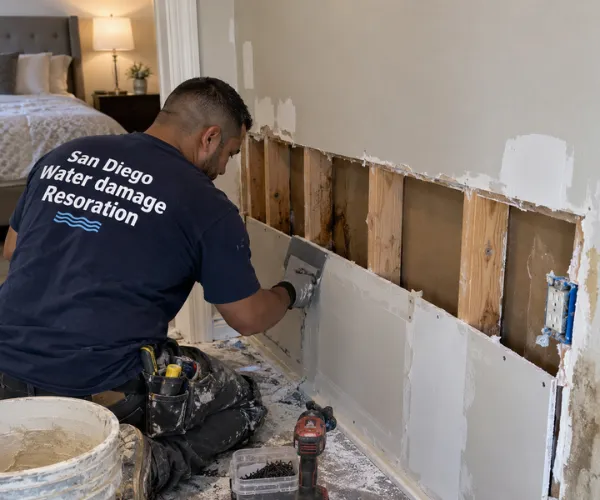
Drywall that is only stained or lightly damp can sometimes be dried and repaired, but soft gypsum, damaged paper facing, or moisture inside the wall cavity usually means replacement. Ceilings add another concern: sagging board is heavy and can fail, so stay clear of it. Wet insulation behind the board holds moisture against framing, so it's checked too. Afterward, surfaces are finished, primed, and painted; painting over damp or damaged drywall is not a substitute for repair.
Flooring and Subfloor Repair

Flooring and Subfloor Repair

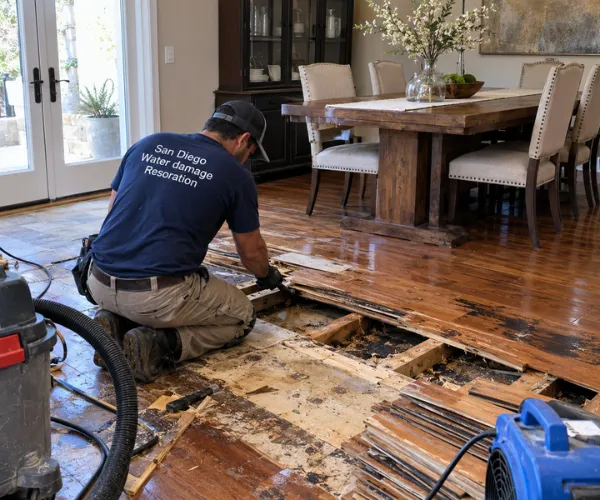
Water can cup hardwood, lift laminate, and loosen tile, and it can saturate the subfloor beneath all three. Hardwood is sometimes saved when it dries quickly, laminate usually isn't, and tile can fail at the grout and underlayment even when the tile looks fine. Swollen plywood or OSB subfloor needs qualified evaluation, and we check readings under the flooring before anything new is installed, because new flooring over a damp subfloor fails.

Kitchen and Bathroom Water Damage Repair

Kitchen and Bathroom Water Damage Repair

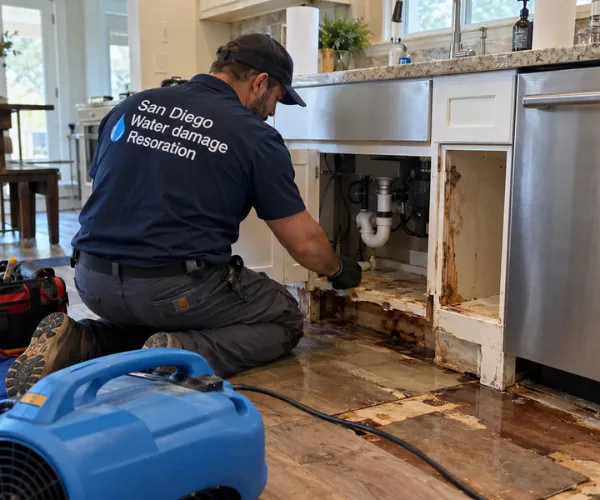
Leaks around sinks, dishwashers, tubs, showers, and toilets often hide moisture inside cabinet bases, wall cavities, and flooring layers. Particleboard cabinet bases swell and delaminate and are usually replaced, while solid wood or plywood boxes sometimes dry and stay. Baseboards, trim, and insulation are replaced when swollen, deteriorated, or contaminated. Moisture mapping shows how far the water traveled from the fixture, and the plumbing source is addressed first.

Structural Framing Repair and Reconstruction

Structural Framing Repair and Reconstruction

Prolonged moisture can soften or deteriorate wood framing, and heavy damage can affect walls, floors, and ceilings together. Structural framing needs evaluation by a qualified professional, and homeowners shouldn't remove or alter load-bearing parts. We document the damage, help define the scope, and coordinate with appropriately licensed contractors for framing repair and larger reconstruction. Reconstruction begins only after moisture readings show the framing has dried.

Why Choose Us for Water Damage Repair?

With 25 years of restoration experience, we focus on sound repair decisions, careful material evaluation, and clear project communication.

Thorough water damage and moisture assessment

We identify affected areas and any residual moisture, because repair decisions depend on what's actually wet and how far the water traveled.

Repair planning based on material condition

We evaluate which materials can be repaired and which should be replaced, and we explain the reasoning so the scope makes sense to you.

Attention to affected and hidden areas

Water migrates behind walls, under flooring, and inside cabinets, so we factor hidden damage into the repair scope before work is priced or closed up.

Clear estimates, communication, and project coordination

You get a defined scope of work, clear next steps, and estimates that explain what's included, with coordination of other qualified professionals where needed.

Documentation

We document the damage, moisture readings, and the work performed, which supports repair planning and your insurance conversations.

Care for your property

We protect occupied spaces and belongings as we work.

What Are the Common Causes of Water Damage That Require Repairs?

Burst Pipes and Plumbing Leaks

Sudden leaks soak walls, flooring, cabinets, and adjoining rooms, and slow leaks can damage materials for weeks before a stain appears. Repairs are needed where drywall softens, flooring lifts, or cabinet bases swell.

Water Heater and Appliance Failures

Water heaters, washing machines, dishwashers, refrigerator supply lines, and HVAC condensate lines can release water onto floors and into cabinets and walls. The damage often concentrates in flooring layers and lower wall sections.

Roof Leaks and Stormwater Intrusion

Roof leaks and storm-driven water enter attics first, then wet insulation, ceilings, and wall surfaces. Stains often appear far from the opening, so repairs start with locating the moisture, not just the stain.

Flooding, Standing Water, and Sewer Backups

Flooding exposes flooring and lower walls to extensive water and possible contamination. Sewage-contaminated materials need specialized remediation and removal before repairs, and aren't treated like clean-water damage.

Our Water Damage Repair Process: From Damage Assessment to Final Repairs

The sequence runs from damage evaluation to finished repairs, and the exact process depends on building conditions and the scope of work. Mitigation always comes before reconstruction.

Step 1

Step 1 – Inspect the Damage and Identify the Water Source

We evaluate visible damage, look for concealed areas behind walls, under floors, and above ceilings, and confirm the cause of the water intrusion has been addressed. Repairing before the leak is fixed just invites the same damage back.

Step 2

Step 2 – Evaluate Moisture, Contamination, and Material Conditions

Moisture readings, the water's source and contamination level, and each material's condition shape every repair decision. A clean supply-line leak and a sewage backup lead to very different outcomes for the same drywall.

Step 3

Step 3 – Complete Water Extraction and Structural Drying When Needed

If standing water or retained moisture remains, mitigation comes first, because repairs over wet materials fail. Extraction and structural drying are separate services from repair, with their own timelines and moisture goals.

Step 4

Step 4 – Remove Materials That Cannot Be Restored

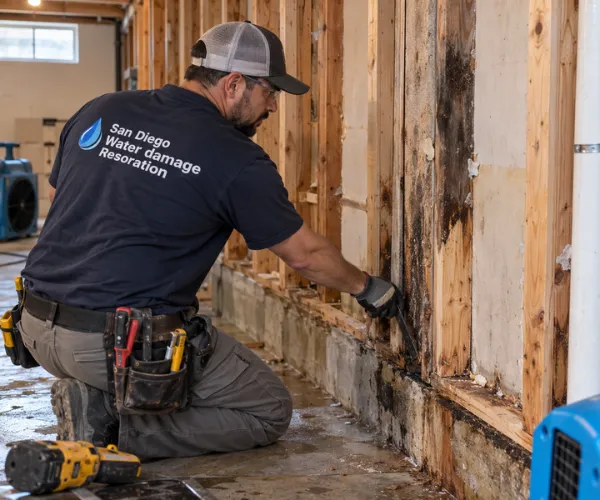
Selective demolition removes materials that are contaminated, deteriorated, or too saturated to restore, such as soft drywall, wet insulation, and swollen cabinet bases. Removal also opens wall cavities so they can dry and be inspected.

Step 5

Step 5 – Repair or Replace Damaged Walls, Floors, Ceilings, and Cabinets

Repairs follow the scope agreed after assessment, with each material handled by its own method. We don't promise every component can be saved, and trades such as framing or flooring may be coordinated with qualified contractors.

Step 6

Step 6 – Complete Finishing Work and Review the Repairs

Finish work includes taping, priming, painting, trim, and flooring transitions. We then review the scope with you, note remaining concerns, and explain any follow-up, such as monitoring an area that had heavy moisture.

Should Water-Damaged Materials Be Repaired or Replaced?

When Water-Damaged Drywall Can Be Repaired

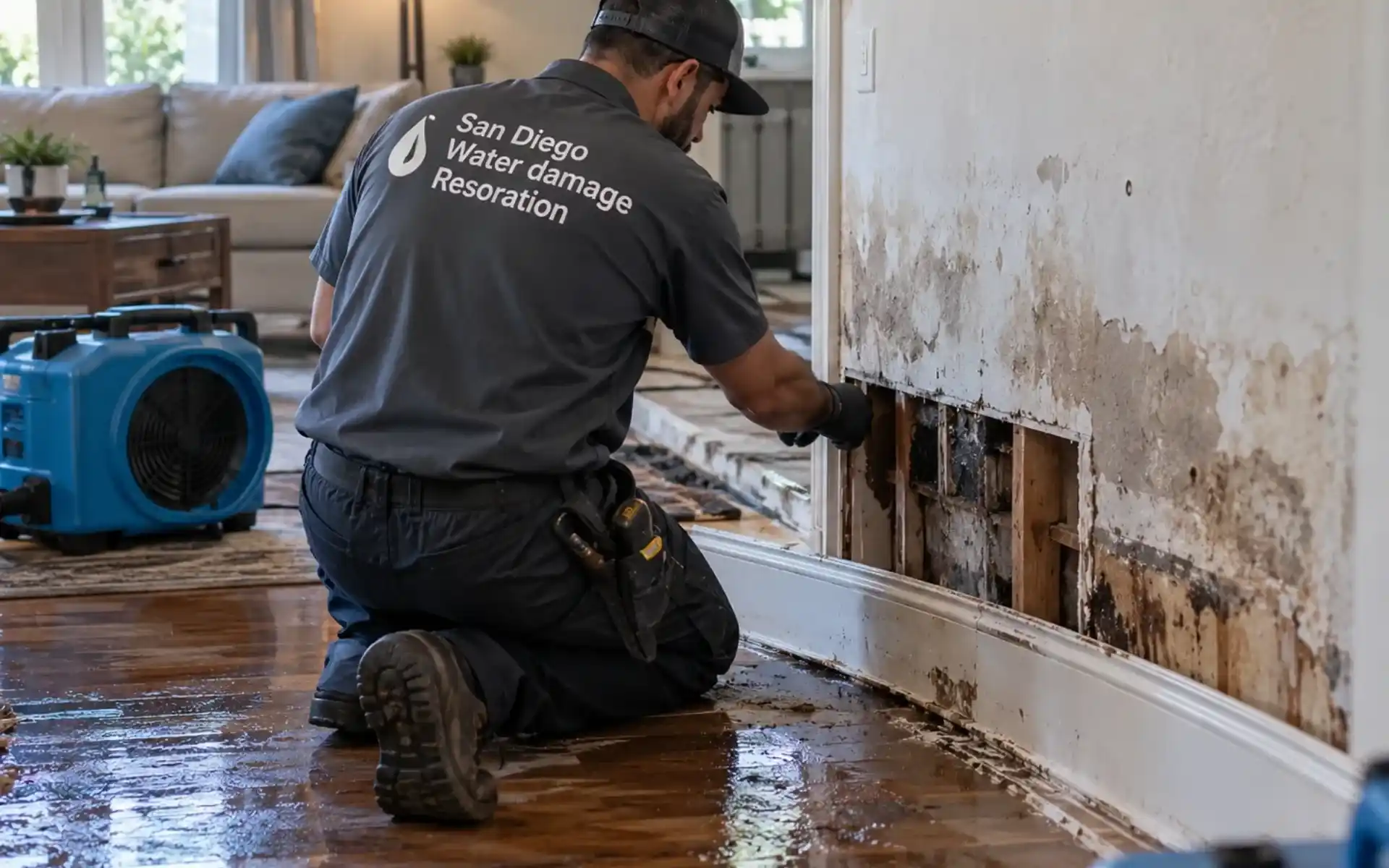
Drywall can sometimes be repaired when damage is limited, the board is still firm, the paper face is intact, and readings show no moisture in the cavity. Soft or crumbling gypsum, bubbling or peeling paper, heavy saturation, or contamination usually means removal and replacement.

Can Water-Damaged Hardwood Flooring Be Saved?

Sometimes. Quick, controlled drying can save hardwood that has only begun to cup, while buckling, finish failure, or a saturated subfloor often points to replacement. Solid, engineered, and laminate planks behave differently, and moisture readings guide the call, not appearance alone.

When Cabinets, Insulation, or Subfloors Need Replacement

Porous or swollen materials are the usual replacements. Particleboard cabinet bases that delaminate, wet or contaminated insulation, and soft or swollen plywood or OSB subfloor rarely return to their original strength. Solid wood and plywood parts have a better chance of drying and staying.

Cosmetic Damage vs. Damage That Needs Replacement

Stains, light discoloration, and surface blistering can be cosmetic when materials are firm and dry. Softness, sagging, delamination, warping, lingering odor, or readings that stay high point to damage beneath the surface that painting or patching won't fix.

How Contamination Changes the Decision

Contaminated water, such as sewage or outside floodwater, makes porous materials candidates for removal even when they look intact, because cleaning can't reliably reach what they absorbed. Clean-water leaks caught early leave more materials salvageable.

How Exposure Time and Moisture Readings Affect Salvage

The longer materials stay wet, the less likely they dry back to a sound condition. Moisture readings compared against dry reference materials show whether a material has recovered, and a final determination can't be made without examining the property.

Residential and Commercial Water Damage Repair in San Diego

We provide water damage repair assessment and coordination in San Diego, California, including [Verified Service Area: neighborhoods and nearby communities confirmed by the business]. Property type affects repair planning, coordination, and access.

Residential Water Damage Repair

In single-family homes, repairs often involve kitchens, bathrooms, bedrooms, and living spaces. We protect occupied areas, assess which materials can stay, and plan repairs and finishes around how the household lives.

Commercial Water Damage Repair

Offices, retail spaces, and other commercial interiors involve scheduling, access, and operational concerns. We scope repairs to the affected areas and coordinate timing with tenants and building management as the damage and building allow.

Water Damage Repairs for Apartments and Condominiums

Shared walls, ceilings, and floors let water reach adjoining units. We help property managers and associations identify affected building assemblies and coordinate repairs across units.

How Much Does Water Damage Repair Cost in San Diego?

Water damage repair costs depend on the damaged materials, affected area, severity, accessibility, necessary repairs, and any mitigation completed beforehand, so a price can't be set before an assessment. A single patched drywall section costs far less than a project involving multiple rooms, flooring assemblies, cabinets, or structural components, and hidden moisture or contamination found during demolition can change the scope.

What affects your price:

  • Damaged square footage and accessibility
  • Drywall, ceiling, and insulation repairs
  • Flooring type and replacement needs
  • Cabinet, baseboard, and trim repairs
  • Structural damage and repair complexity
  • Materials, labor, demolition, debris handling, and any added moisture or contamination
Estimate Information

National estimates give a sense of scale, not a San Diego quote. Angi lists typical water damage restoration at $1,383 to $6,369 overall, HomeAdvisor lists drywall water damage repair at $300 to $850, Angi puts hardwood floor water damage repair at $8 to $100 per square foot depending on severity, and HomeGuide lists subfloor replacement at $500 to $2,100 for a 200- to 500-square-foot room. Mitigation is usually priced separately from repairs. Insurance may cover sudden, accidental damage such as a burst pipe, while long-term leaks and outside flooding are often treated differently, so coverage depends on your policy, exclusions, deductible, and cause of loss.

Call (619) 320-9986

Frequently Asked Questions

Common questions

Frequently Asked Questions

How much does water damage repair cost in San Diego, CA?

Costs depend on the damaged materials, affected area, severity, access, and prior mitigation, so they can't be set before an assessment. A limited drywall repair costs far less than a multi-room project with flooring, cabinets, and framing.

Who should I call for water damage repair in my home?

Start with a restoration professional for water removal and drying, a plumber to fix the source, and an appropriately licensed contractor for repairs. We can assess the damage and help coordinate who handles each part.

Can water-damaged drywall be repaired without replacing the entire wall?

Often, yes, when damage is limited and the board is firm. Soft, crumbling, or heavily saturated drywall, or drywall with wet insulation or contamination behind it, is usually replaced in sections or whole sheets.

Can hardwood floors be repaired after water damage?

Sometimes. Early drying can save floors with mild cupping, but buckling, finish failure, or a saturated subfloor often means replacement. Construction type matters, and moisture readings, not appearance, guide the decision.

How do I know if water damage has reached the subfloor?

Look for soft or spongy spots, squeaking, lifting or cupped flooring, staining, or a musty odor, then confirm with moisture readings. Subfloor damage can hide beneath intact flooring, so assessment before repair matters.

Do I need structural drying before water damage repairs?

Usually, yes. Materials with retained moisture shouldn't be enclosed or finished, because trapped moisture causes paint failure, deterioration, and mold-friendly conditions. Drying is verified with readings before walls are closed.

How long does water damage repair usually take?

It varies. Damage extent, drying completion, material availability, specialty trades, permits, occupancy, and insurance approvals all affect scheduling. Repair time is separate from extraction and drying time, and we can't guarantee a schedule.

Does homeowners insurance cover water damage repair?

Sometimes. Coverage depends on the cause of loss, policy language, exclusions, endorsements, limits, and deductible. Sudden accidental damage may be covered, while long-term leaks and outside flooding are often treated differently. Ask your insurer before work begins.

Can water damage lead to mold behind walls or cabinets?

Yes, it can. Persistent moisture inside walls, behind cabinets, or beneath flooring can support mold growth, though it isn't guaranteed. Thorough drying and moisture checks before closing walls reduce the risk.

Is it better to repair or replace water-damaged cabinets?

It depends on the material. Solid wood and plywood boxes may dry and stay, while swollen particleboard, delaminated faces, and contaminated cabinets are usually replaced. Structural condition and hidden moisture behind them matter too.

Can I stay in my home during water damage repairs?

Often, when affected areas can be isolated and there are no contamination, electrical, or structural hazards. Dust, noise, and restricted rooms are common during repairs, so occupancy depends on safety and the areas involved.

What's the difference between water mitigation and water damage repair?

Mitigation controls active water damage through extraction, drying, and cleaning. Repair rebuilds what remains damaged, such as drywall, flooring, and cabinets. Mitigation comes first, and repairs follow once materials are dry.

Can water damage repairs begin before the property is completely dry?

Not in the affected area. Walls, floors, and ceilings need moisture control and verified readings before they're enclosed or finished. Unaffected areas can often proceed, so we confirm which areas are dry enough.

What should I do immediately after discovering water damage?

Stop the water source if it's safe, stay away from electrical hazards and possibly contaminated water, photograph the damage from a safe spot, report it to your insurer, and call restoration and repair professionals.

What are the signs my property needs water damage repair?

Common signs include cracked, soft, or swollen drywall, peeling paint or ceiling stains, buckled or loose flooring, swollen cabinets and baseboards, and persistent musty odors. Stains that return after repainting often mean ongoing moisture.

How can I prevent water damage from happening again?

Check plumbing, appliance hoses, and the water heater regularly, maintain the roof and drainage, repair recurring leaks promptly, and monitor areas with past moisture. Maintenance lowers risk but can't prevent every leak.

Need help with water damage?

Request a restoration assessment

Tell us what happened, where the water is coming from, and which areas are affected. We can discuss the next practical step.