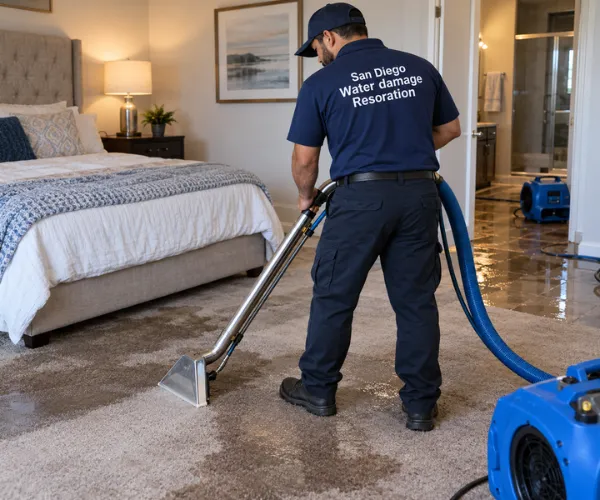
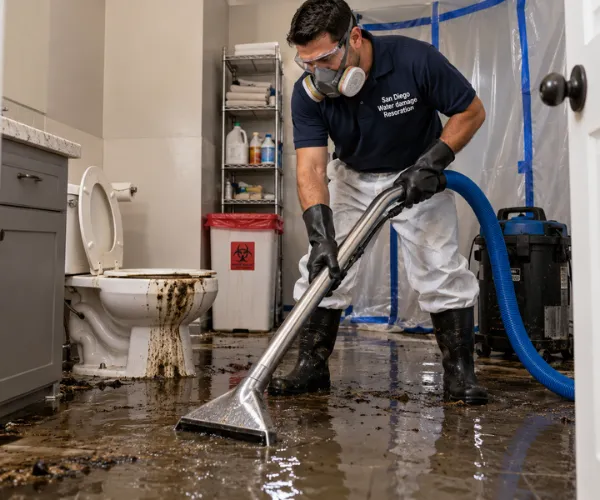
Water extraction in San Diego, CA is the professional removal of standing water after leaks, flooding, and plumbing failures, using pumps and extraction equipment suited to the water and the flooring. San Diego Water Damage serves homes, condominiums, and commercial properties, removing standing water and then checking for the moisture that remains. Visible water is only part of the problem: water can wick into carpet padding, drywall, cabinets, and subfloors and keep causing damage, so prompt, safe removal matters. We find the source, assess hazards and contamination, extract the water, and measure what's still wet. Call (619) 320-9986 for water extraction help or request a water damage assessment.
What Water Extraction Services Do We Offer in San Diego?
Water removal needs differ by property type and cause of loss. These four services cover the most common situations, from clean leaks to contaminated water.
Emergency Water Extraction and Standing Water Removal
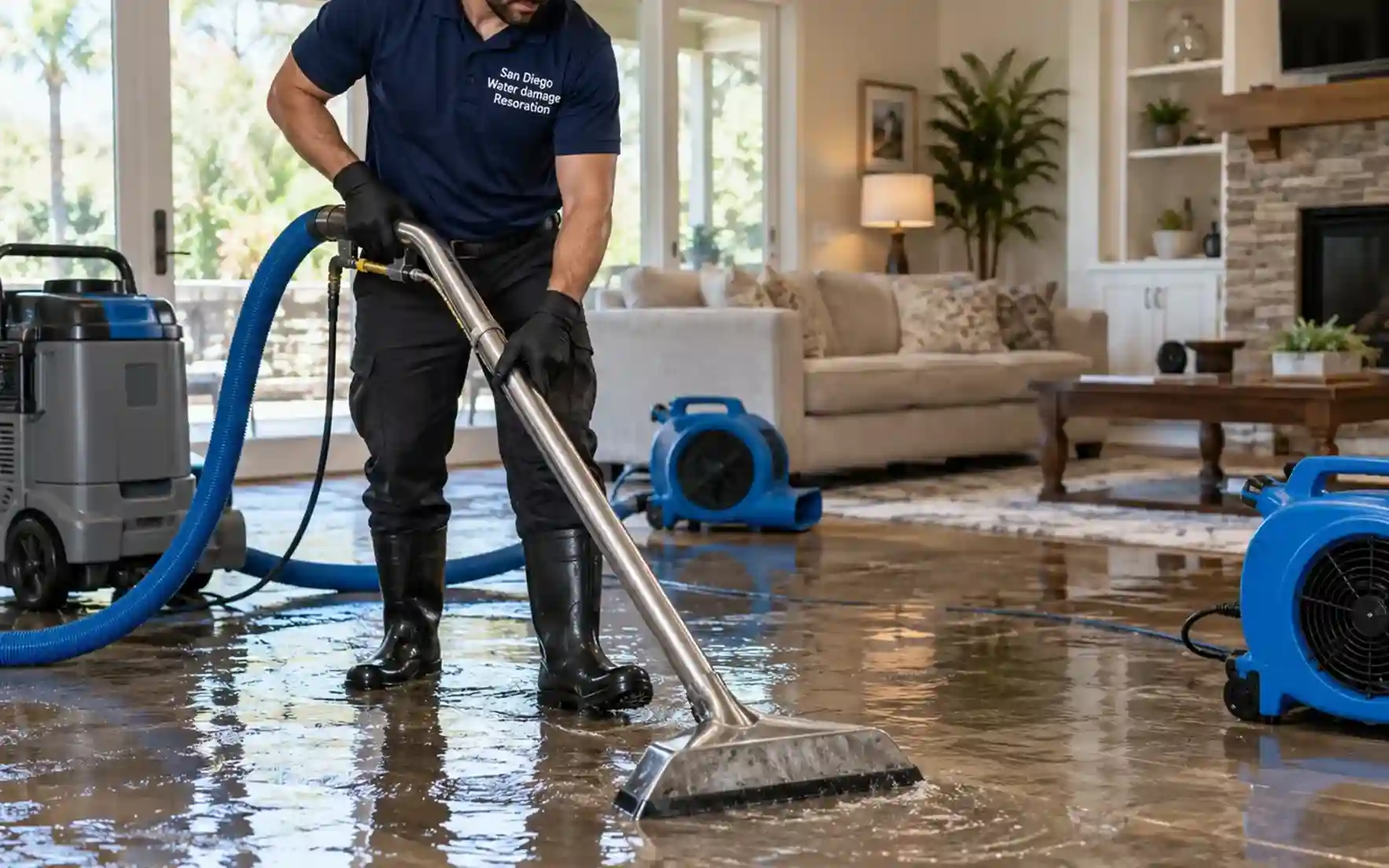
After sudden water intrusion, we remove pooled water from floors and interior rooms using pumps and extraction equipment suited to the amount of water. Prompt professional assessment helps limit how far moisture spreads into materials.
Flood Water Extraction
Stormwater intrusion, roof leaks, and flooded spaces call for extraction plus extra precautions, because floodwater may contain contaminants. We assess the water source first, then remove water in a way that limits contamination and prepares the space for drying.
Carpet and Flooring Water Extraction
Water gets trapped in carpet, padding, flooring joints, and subfloors. We extract it with targeted tools and evaluate wet padding and flooring, because not every affected material can be saved.
Sewage-Contaminated Water Extraction
Sewage-contaminated water needs containment, contamination control, and specialized remediation, not extraction alone. We treat it as a separate procedure from clean-water removal and recommend cleaning, disinfection, and material removal where needed.
Why Choose San Diego Water Damage for Water Extraction?
Careful assessment, equipment matched to the job, and clear restoration planning make water extraction more effective. Here's what you can expect.
Experience
25 years of restoration experience and many successfully completed projects.
Detailed moisture detection
We use moisture meters to find moisture beyond visibly wet areas, so extraction and drying cover what's actually wet.
Equipment matched to the job
Pumps and extraction equipment are chosen for the amount of water, the flooring, and whether the water may be contaminated.
Clear communication
We explain the affected areas, the recommended extraction work, and the drying or repairs that may follow.
Documentation
We document the water damage and the work performed.
Care for your property
We protect occupied spaces and belongings as we work.
What Are the Common Causes of Standing Water in San Diego Properties?
Burst Pipes and Plumbing Failures
Sudden pipe failures and failed supply lines can release water quickly, spreading through floors, walls, and adjoining rooms before anyone notices.
Appliance Leaks and Water Heater Failures
Washing machine and dishwasher supply lines, appliance overflows, water heater leaks, and blocked HVAC condensate drains commonly leave water on floors and soaking nearby cabinets and walls.
Heavy Rain and Stormwater Intrusion
Heavy rain, drainage problems, and roof leaks can let water into a property through doors, foundations, ceilings, and storm-damaged openings.
Sewer Backups and Drain Overflows
Backups and overflows can carry wastewater contamination, so they need appropriate professional handling rather than routine cleanup.
Our Water Extraction Process: From Water Removal to Structural Drying
Water extraction follows an organized workflow: assessment, safety checks, water removal, targeted extraction, drying, and monitoring. Each step prepares for the next.
Step 1
Step 1 – Inspect the Water Damage and Identify the Source
We locate where the water came from, identify every affected room, and evaluate flooring, walls, and cabinetry. Finding the source matters because extraction only helps if the leak or intrusion has been stopped or can be controlled.
Step 2
Step 2 – Assess Water Contamination and Safety Hazards
We check for electrical hazards, structural concerns, and whether the water is clean, gray, or contaminated. The water's source and what it touched decide the equipment, protective gear, and cleanup steps that follow.
Step 3
Step 3 – Extract Standing Water Using Professional Equipment
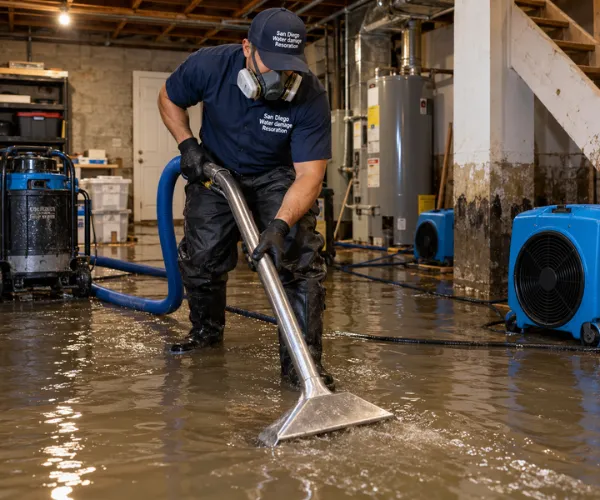
We remove accessible pooled water with submersible pumps or portable extractors, depending on depth and access. Removing bulk water first reduces how much moisture materials absorb and how much the drying equipment must remove later.
Step 4
Step 4 – Remove Water From Carpets, Flooring, and Affected Areas
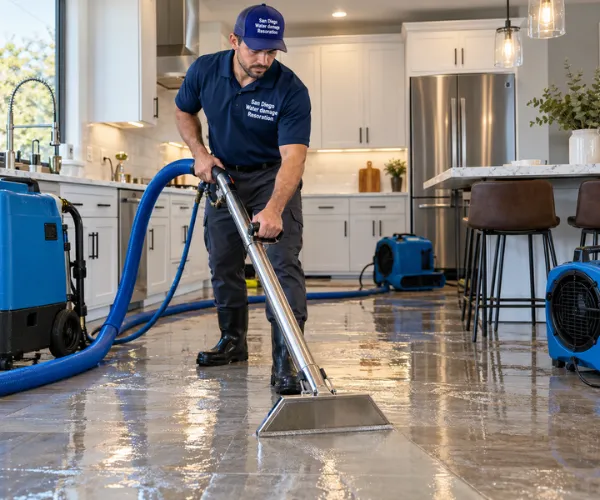
We use extraction wands and wet extraction tools to pull water from carpet and accessible flooring, then evaluate wet padding and flooring materials. Some materials dry in place, while others are removed because they can't reasonably be restored.
Step 5
Step 5 – Begin Structural Drying and Dehumidification
Extraction removes accessible water, not moisture held inside materials. We set up air movers and dehumidifiers where needed, with equipment placement based on the moisture conditions we find.
Step 6
Step 6 – Monitor Moisture Levels and Review Restoration Needs
We take moisture readings to track drying progress, confirm when materials reach appropriate drying goals, and review remaining repairs with you. Extraction and drying have separate timelines, and drying follows the readings.
What Are the Signs Your Property Needs Professional Water Extraction?
Standing Water on Floors
Visible pooling means the water has nowhere to go. Identify the source before anything else, because ongoing leaks and hazardous water change what's safe to do next.
Wet Carpets and Saturated Padding
Carpet padding holds a lot of water and releases it slowly, so carpet that feels squishy underfoot often has saturated padding beneath it.
Water Seeping Beneath Flooring
Water can run into gaps and collect under hardwood, laminate, or tile, causing cupping or buckling while the surface looks only slightly damp.
Damp Walls, Baseboards, and Cabinets
Porous materials like drywall, baseboards, and cabinet bases wick moisture upward, so stains, soft spots, or peeling paint can signal water well beyond the visible puddle.
Musty Odors and Hidden Moisture
A musty smell can point to persistent moisture in concealed materials. It doesn't prove mold, but it's a good reason to have moisture meters check walls and floors.
Basements and Crawl Spaces
Lower areas collect water and dry slowly. Limited access, damp framing, and electrical or structural hazards make these spaces riskier, so professional assessment is safer.
Residential and Commercial Water Extraction in San Diego
We provide water extraction in San Diego, California, including [Verified Service Area: neighborhoods and nearby communities confirmed by the business]. Methods change with property size, building systems, and the areas affected.
Residential Water Extraction
In homes, extraction covers kitchens, bathrooms, living rooms, bedrooms, and other affected spaces, with attention to carpet, padding, cabinets, and flooring joints.
Commercial Water Extraction
Offices, retail spaces, warehouses, and other commercial buildings often involve larger floor areas and operations to work around. We scope the extraction to the space and coordinate with building management.
Water Extraction for Apartments and Condominiums
Water in a multi-unit building can move between floors and into adjoining units, so we work with property managers to identify affected units and common areas.
How Much Does Water Extraction Cost in San Diego?
Water extraction costs vary with the amount of water, access conditions, affected materials, and contamination concerns. A small clean-water leak in one room needs far less equipment and labor than a flooded space with saturated flooring, material removal, or contamination precautions.
What affects your price:
Water volume
Affected square footage and accessibility
Type of water: clean, gray, or contaminated
Equipment and labor
Flooring conditions
Additional drying requirements
Estimate Information
National data from Angi prices water damage mitigation, which includes extraction and drying, at roughly $3 to $7.50 per square foot depending on water category. These are estimates, not quotes. Insurance may cover sudden internal plumbing damage, while outside floodwater usually requires separate flood coverage, so check your policy, exclusions, and endorsements.
How much does water extraction cost in San Diego, CA?
Cost depends on water volume, affected square footage, access, water type, flooring, and drying needs, so it can't be set before an assessment. Contaminated water and extensive flooding generally require more equipment and labor.
What is the fastest way to remove standing water?
Professional pumps and extraction equipment are usually fastest, but safety comes first. Don't enter water near electricity, and treat water of unknown origin as potentially contaminated until it's been assessed.
Can I remove standing water myself?
Limited clean-water spills may be manageable, such as a small appliance leak on a hard floor. Standing water that is deep, spreading, near electricity, or possibly contaminated calls for professional help.
How soon should water extraction begin after a leak or flood?
As soon as it's safe. Water keeps spreading into flooring, drywall, and cabinets while it sits, so prompt removal limits damage. We can't promise a response time, but early assessment helps.
How long does professional water extraction take?
It depends on water volume, affected area, access, flooring type, contamination, and equipment needs. Extraction and structural drying are separate stages with different timelines, and drying follows moisture readings.
Can water be extracted from carpet and padding?
Often, yes, but salvage depends on contamination, saturation, and how long the materials stayed wet. Clean-water carpet may dry in place, while saturated padding or contaminated carpet is often replaced.
Does water extraction remove moisture from inside walls?
No. Extraction removes accessible water, while moisture inside wall cavities and framing needs assessment and structural drying. Moisture meters help locate it, and drying equipment removes it.
Is water extraction covered by homeowners insurance?
Sometimes. Coverage depends on the water source, policy terms, exclusions, and endorsements. Sudden internal plumbing damage may be covered, while outside floodwater usually needs separate flood insurance. Ask your insurer before work begins.
Can mold grow if standing water is removed quickly?
It's less likely, but possible. Hidden moisture can remain in walls, padding, and subfloors after visible water is gone. Moisture checks and thorough drying reduce the damp conditions that support mold.
Do I need structural drying after water extraction?
Usually, when building materials have absorbed moisture. Extraction handles standing water; structural drying uses air movers and dehumidifiers to remove what's in drywall, framing, and subfloors. Both are stages of water damage restoration.
What should I do immediately after discovering standing water?
Stay out of water near electrical equipment or of unknown origin, and keep people and pets away. Shut off the water supply only if it's safe, photograph from a safe spot, and call a professional.
How can I prevent future standing water?
Inspect plumbing, appliance hoses, and the water heater regularly, keep gutters and drainage clear, check the roof, and repair leaks promptly. Maintenance lowers risk but can't prevent every leak or flood.
Need help with water damage?
Request a restoration assessment
Tell us what happened, where the water is coming from, and which areas are affected. We can discuss the next practical step.