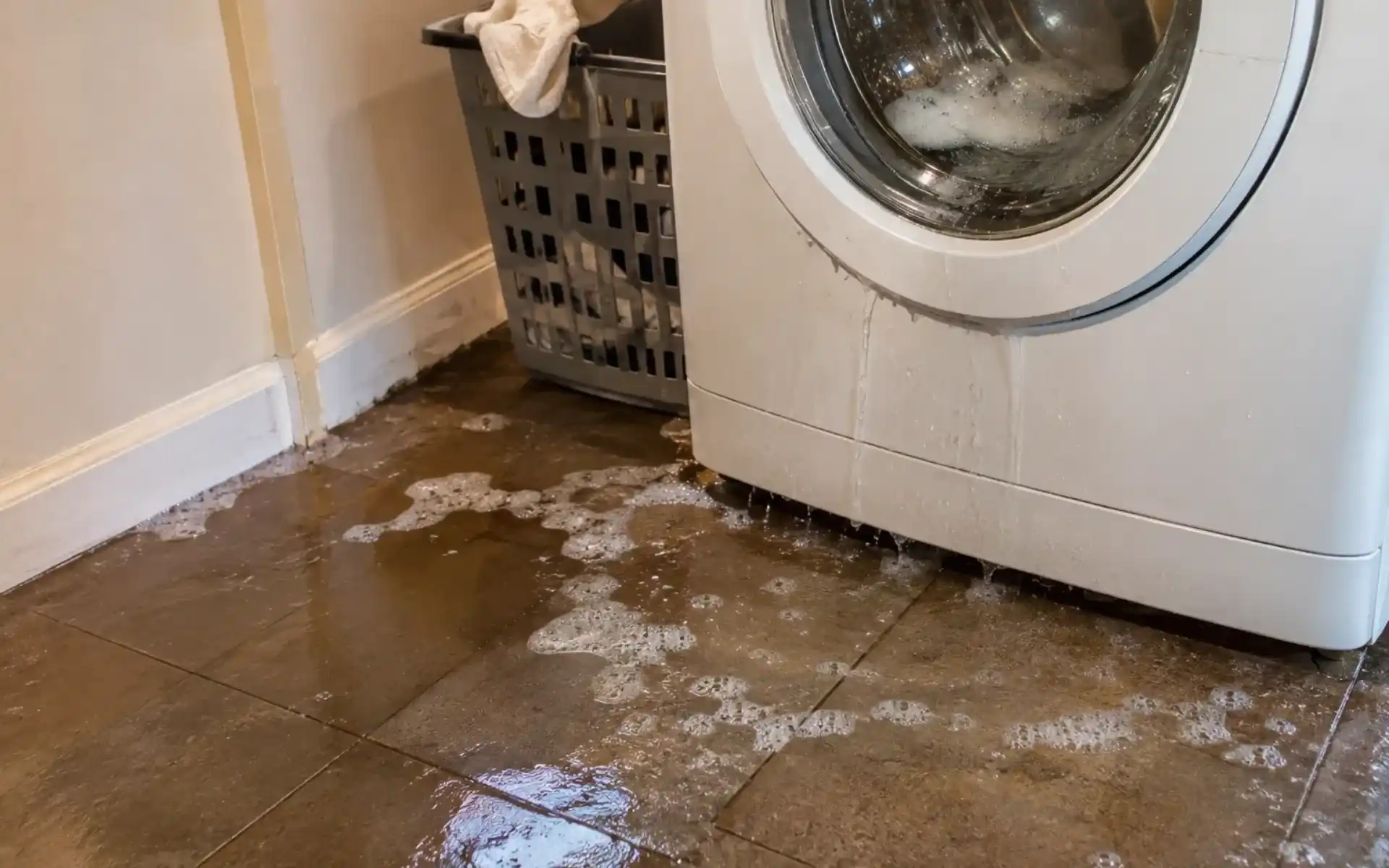
A washing machine leaks because a specific part has failed, a connection has loosened, or water cannot drain properly. The most useful clues are where the water appears and when it shows up during the cycle. A puddle at the back suggests something different from one at the front, and a leak only during spinning points elsewhere than one during filling. Diagnosing by phase and location first saves you from replacing parts that were never the problem.
Model type matters as well. Front-loaders most often leak from the door gasket, the pump filter or the detergent drawer, while older machines can leak from the center underneath when a tub seal or bearing wears out. Many causes are simple to handle yourself, such as hoses, filters, seals and too much detergent. Problems inside the machine, such as seals, pumps and valves, usually call for a technician.
What should you do first when your washing machine is leaking?
First, unplug the washer and shut off both water supply valves if water is still pooling. This removes the shock risk and stops new water from entering while you work. Then mop up the floor so you can see exactly where fresh moisture appears, since a wet floor hides the real starting point. Do all of this before you open any panel or reach behind the machine.
Next, use the paper towel test. Place dry paper towels or tissues around the hoses, the filter cap and the base of the machine. Whichever towel gets wet first shows where the water originates, which is much more reliable than guessing from the puddle alone. Watching a short cycle then tells you whether the leak happens while filling, washing or draining. Those two facts together narrow the cause considerably.
Finally, factor in whether the machine is a top-load or front-load model. The location of the leak, whether front, back, bottom or only during spin, also helps separate jobs you can do yourself from those needing a technician. Hose fittings, a filter cap or a dirty gasket are easy checks. Water coming from underneath the tub is a different matter and often needs professional help.
How do you find where the leak is coming from?
Dry the floor, place paper towels around the hoses, filter cap and base, run a short cycle and see where moisture reappears first. That first wet spot is your starting point. Also note whether water gathers at the front, at the back or in the center underneath the machine, because each area has its own typical culprits. Check each of those spots before assuming the problem is serious.
Water at the back is often a loose or cracked supply hose at the wall connection. Look closely at the fittings for looseness, cracks, dampness or a mineral crust, which usually signals a slow seep that has been going on for some time. Run a hand along the hose and the faucet connection, since even a thin film of moisture matters. These leaks may be slight, but they tend to worsen over time.
Water at the front often comes from the door seal on a front-loader, the pump filter cap near the bottom, or the detergent drawer. If the water collects near the bottom edge, check the filter cap first, because a cap that is loose or poorly seated is an easy fix. Keep the towels in place while the machine fills, washes and drains. Each phase stresses different parts, so timing is as informative as location.
Center-bottom leaks are harder to trace and may point to internal parts. If towels around every hose and the filter stay dry but water still appears under the middle of the machine, especially during spin, suspect a worn tub seal or bearing. Repeat the short test cycle after each check to confirm what you have ruled out. This keeps you from tightening or replacing parts that were never leaking.
Is it safe to keep using a leaking washing machine?
No, you should stop using a leaking washer until the cause is found. Water near the outlet and the base of the machine creates an electrical shock risk, so unplug the washer and keep your hands dry around the plug. Even a small leak can become a larger one mid-cycle, when the machine is moving the most water. Running it again just adds more water to the problem.
Water that pools under or behind the machine also damages the home. It can soak into the subfloor and cause rot, feed mold growth on nearby walls, and warp or stain flooring. These problems often stay hidden until they are extensive, which is why small, recurring puddles deserve attention. Wiping the floor dry is not the same as fixing the source.
Continued use can lead to further damage and more expensive repairs. A loose hose that could have been tightened in a minute can turn into water damage and a ruined floor. Diagnose the leak using the paper towel test and the cycle timing before running another load. Once you know the cause, you can decide whether it is a quick fix or a job for a technician.
Why is my washing machine leaking at different stages of the cycle?
Each stage of the cycle stresses different parts, so the timing of a leak rules out many causes quickly. A leak at the start of the cycle points to the hoses, while leaks during the wash and rinse often involve the door seal or suds. Leaks during draining or spinning usually come from the pump, filter or drain hose. The table below links each phase to its typical location and likely cause.
Use the table as a starting point rather than a final verdict. Several causes can overlap, and you should still confirm with the paper towel test before replacing anything. Center-bottom leaks on older machines point to the tub seal or bearing, which is a different category of repair from a hose or filter. The sections that follow explain each phase in detail.
| Phase | Location | Likely cause |
|---|---|---|
| Fill | Back | Hoses, valve |
| Wash/rinse | Front | Door seal, suds |
| Drain/spin | Bottom | Pump, filter, drain hose |
Why does the washer leak while filling?
A washer that leaks while filling usually has a problem with the supply hoses, their connections or the inlet valve. Inspect the hot and cold hoses at the back for cracks, bulges or brittleness, since a damaged hose can fail as soon as water pressure builds. Replace any hose that looks worn. Check the rubber washers or O-rings inside the connections too, as these can harden or go missing.
Tighten both ends of each hose, at the machine and at the wall valve, using pliers if needed. Then inspect how the valve operates. A cracked water inlet valve can drip even when the machine is turned off, which is a useful clue if you find water after the washer has been idle. That type of leak usually needs a replacement part.
Water can also appear at the front during filling if the detergent dispenser is clogged or damaged. A blocked drawer or a faulty internal hose can overflow when the first water rushes in. If the hoses and connections are dry but water spills from the drawer area, clean the drawer and housing. If the leak continues, the internal hose may need attention from a technician.
Why does the washer leak during the wash or rinse cycle?
Leaks during the wash or rinse cycle most often come from the door seal on a front-loader. The large rubber gasket between the door and drum is the most common source of front-load leaks, and a torn, cracked or dirty boot lets water escape as the drum moves. Lint, hair or small items trapped in the folds can also stop the door sealing properly. Wipe the folds and inspect for tears.
Two habits make this worse. Too many clothes in the drum can push water against the seal and spill it during the wash or spin. Using too much regular detergent creates excess suds that leak from the door or the vents. Reduce the load size and switch to the correct amount of the right detergent. If the leak persists with a clean, intact gasket, look at the drain components next.
Why does the washer leak while draining or spinning?
A leak while draining or spinning usually comes from the drain pump filter, the pump itself or the drain hose. Front-load models typically have an accessible pump filter on the front near the bottom, behind a small panel at the bottom left. A clogged, loose or damaged filter is a very common culprit. Check that first because it is the easiest fix.
If you recently cleaned the filter and now see a leak, confirm the cap is reseated fully. The cap forms an airtight seal, and a cross-threaded or loose one will drip as soon as the pump pushes water through. Remove it, check the threads and the seal, and tighten it back properly. Then rerun a short drain cycle on dry towels.
Next, look at the drain hose for kinks, blockage or cracks. A bent or clogged hose forces water back out at connections, while a cracked one leaks under pump pressure. Make sure the hose is held securely in its holder and is not pinched behind the machine. A failing drain pump or cracked pump seal can also leak under pressure, which usually requires a repair.
Finally, check the household standpipe or floor drain. If water backs up and spills out during the pump cycle, the washer may be fine and the drain is clogged. Water backing out of the drain pipe may need a plumber to clear the clog. Try a small load to see whether the drain keeps up before blaming the machine.
Why is water leaking from the center underneath an older machine?
Water leaking from the center underneath an older machine, especially during spin, usually means a worn main tub seal or bearing. When the seal fails, water leaks straight down from the center of the tub beneath the machine. This is not a surface problem like a loose hose. It originates inside the washer, so tightening fittings will not fix it.
The pattern is a helpful sign. The leak may only appear during spin, when the tub is turning quickly, and it often worsens over time. You may also hear a grinding noise, which suggests the bearing is wearing. A leak that appears during spin specifically points to the tub seal or the transmission seal. Make sure first that the hoses and filter are dry.
Repair complexity is the main issue here. Replacing a tub seal or bearing generally means taking the machine apart, which is difficult, time-consuming and not a typical DIY job. Because the work is extensive, the cost can approach that of replacing the washer. That matters most when the machine is already old.
Weigh the machine’s age and condition against the repair quote. A newer, otherwise sound washer may be worth repairing, while an older one with other signs of wear may be better replaced. Either way, stop using the machine, because continued leaking can damage the floor and bearing assembly further.
How do you fix a leaking washing machine step by step?
To fix a leaking washer, prepare safely and then work from the easiest checks to the hardest. Unplug the machine, shut off the water, lay down towels and keep a shallow pan handy for residual water. Run a test cycle after each fix so you know exactly what solved the problem. That prevents unnecessary parts and repeated guesswork.
The good news is that most leaks have controllable, easily remedied causes. Start with hoses and connections, then the pump filter, door seal, detergent drawer and finally leveling. Each of these has a dedicated section below. If none of them stops the leak, the cause is probably internal and worth a professional diagnosis.
How do you fix leaking supply and drain hoses?
Inspect each hose for cracks, tighten the connections, and replace worn washers or O-rings. Tighten supply hose connections hand-tight plus a quarter-turn, since overtightening can damage the rubber seal. After that, turn the water back on slowly. Check the fittings with a dry paper towel.
- Inspect for cracks.
- Tighten hand-tight plus quarter-turn.
- Replace worn parts.
- Check drain hose.
Replace any supply hose that is cracked, bulging or brittle rather than trying to patch it. Replacing cracked supply hoses costs $15-$30 at a hardware store, which is cheap compared with water damage. Turn off both supply valves first, and keep a towel handy for the water left in the line. Fit the new hoses to the correct hot and cold connections.
Next, check the drain hose for kinks, bends or damage. A kinked hose slows draining and can force water out of the connections, while a cracked one leaks directly. Straighten any bends, replace a damaged hose, and confirm it sits in its holder securely. An unsecured hose can slip out of the standpipe during the pump cycle.
Run a short cycle with towels in place to verify the repair. Watch both ends of every hose during fill and drain, since leaks often appear only under pressure. If the connections stay dry, the hoses are sorted. If water appears elsewhere, move on to the pump filter or door seal.
How do you clean the drain pump filter without making a mess?
Locate the access panel, set towels and a shallow container in place, remove the cap slowly to drain the residual water, then clean and reseat the filter. On front-loaders the panel is usually at the bottom front. Unplug the machine first. Prepare before you open anything, because the water comes out quickly.
Use a towel and a container large enough for the washer’s water volume. The pump filter cap forms an airtight seal and can be tough to remove, so turn it gradually and let water trickle out instead of forcing it. Tilting the container helps catch the flow. Empty it as it fills.
Once the water has drained, fully remove the filter and clear any debris such as lint, coins, hair or small items. Rinse it and check the housing too. A blocked filter is a frequent cause of leaks and slow draining. Cleaning it regularly can prevent repeated problems.
Reinsert the filter completely, tighten the cap and reattach any drain hose or panel. The most common mistake is a cross-threaded or loose cap, which leaks as soon as the pump runs. Seat the cap straight, and turn it until it is snug. Run a short drain cycle on dry towels to confirm.
How do you fix a leaking door seal?
Check the folds of the rubber gasket for trapped debris, hair or small items, and wipe them clean. Look for tears or mold damage as you go. Debris can prevent the door closing against the boot, which is enough to let water out. Pull the folds gently apart to inspect them thoroughly.
For grime or mold, apply a door seal cleaning solution and let it sit 15 minutes before wiping. Then dry the gasket and leave the door ajar between loads. Reduce the load size too, since overloading pushes water against the seal. If the leak stops, you have fixed it without replacing anything.
If the gasket is torn, it needs replacing. Door boot gasket replacement costs $130-$220. Because a tear cannot be sealed reliably with cleaning, running the machine with a damaged boot risks floor damage. Get the correct part for your model.
How do you fix a leaking detergent drawer?
Clean the soap scum from the drawer and its housing, confirm the drawer is fully assembled and seated, and use the correct amount of HE detergent. These simple steps solve most drawer leaks. Remove the drawer according to your model’s design. Wash it in warm water and clear the cavity behind it.
- Remove and clean drawer.
- Clear housing.
- Reassemble fully.
- Reduce detergent.
Confirm the detergent drawer is completely assembled, including any inserts for softener or liquid. A misplaced piece can send water over the edge instead of through the channels. Slide it all the way in afterward. A drawer that sits unevenly can overflow at the front.
Residue buildup narrows the passages, so water backs up and spills out during fill. Scrub the channels with a brush and rinse until water runs freely. Check the internal hose connected to the dispenser as well. If it is clogged or damaged, a technician may need to replace it.
Too many suds calls for less detergent next time. Use HE detergent in the amount recommended for the load size, as extra soap creates foam that pushes out of the drawer. Run a test fill to confirm the drawer stays dry. If it does, the cause was buildup or overdosing.
Can leveling or moving the washer cause leaks?
Yes, a washer that is unlevel, or that was recently moved, can leak. After a move, hoses may have loosened, connections may have been disturbed, or shipping bolts may not have been handled correctly. An unlevel machine vibrates and shifts during spin, which stresses hoses and seals. Check these before looking for anything more serious.
- Check floor and clearance.
- Rock test.
- Adjust legs.
- Tighten locking nuts.
Start by checking the floor and the surrounding space. Leave one inch of separation between the washer and dryer, and from any wall, before leveling. Then push on the top corners to rock-test for wobble. Any movement means the legs need adjusting.
Adjust the legs until the machine sits firmly and does not rock. On front-load models, tighten the locking nuts afterward so the legs stay in place. Use a level on top to confirm. Run a spin cycle to check for vibration.
If the leak began after moving, recheck every hose connection and look at the drain hose position. Make sure the supply fittings are snug and the drain hose is secure. Also confirm that any shipping bolts were handled as the manual describes. Test a short cycle with towels in place.
Why is my washing machine leaking soapy water, suds or detergent?
Soapy water usually means too much detergent, or a type not suited to an HE washer. Too much or the wrong detergent in HE washers can create excess suds that overflow the drawer or door. Correct detergent type and amount prevents over-sudsing leaks. Measure the dose by load size instead of pouring by eye.
Residue can also clog the drawer and seal, which causes leaks from the drawer. Dirty or black residue is usually mold or grime from the seal and drain areas rather than a mechanical failure. Clean the drawer, wipe the gasket, and run a cleaning cycle. If the soapy leak continues after that, look at the drain components.
Should you fix a washing machine leak yourself or call a technician?
You can handle hoses, the pump filter, seal cleaning, detergent amount and leveling yourself. Call a technician for the tub seal or bearing, a pump replacement, a cracked outer tub, internal hoses or the inlet valve. Professional repair is generally recommended for leaks underneath the washer, beyond simple hose fixes. The table summarizes the split.
| DIY | Technician | |
|---|---|---|
| Hoses, filter, seal cleaning | Tub seal, pump, inlet valve |
Consider machine age, repair cost versus replacement, and electrical risk. Drain pump replacement costs $130-$220, and door boot gasket replacement costs $130-$220. DIY repair attempts might void the washer warranty, so check your coverage first. If the cost nears a new washer, replacement may make sense.
How can you prevent washing machine leaks?
Prevent leaks with routine checks, the right detergent amount and regular cleaning. Check washer hoses for wear every few months, wipe the door seal and avoid overloading. These small habits catch most problems early. They are far easier than cleaning up after a leak.
Clean the drain hose once a year to remove debris that causes clogs. Clean the pump filter periodically and keep the drain hose properly positioned. Level the machine, and run a clean cycle to limit soap scum and mold. Use HE detergent in the correct amount.
Schedule professional maintenance every 1-2 years. A technician can spot worn seals, pumps and valves before they fail. That is especially useful on older machines. Catching wear early is far cheaper than repairing water damage.
Frequently Asked Questions About Washing Machine Leaks
Is a small leak serious? Yes,
it can be. Even slight dampness can lead to subfloor rot and mold over time, so find the source promptly. Use the paper towel test and note the cycle phase. Many causes are simple to fix.
Why does my washer leak only while spinning?
Leaks during spin often come from the drain pump, filter or drain hose. If the water comes from the center underneath an older machine, the tub seal or transmission seal may be worn. That type of leak usually needs a technician. Check the filter cap first.
Can too much detergent cause a leak?
Yes. Excess suds from regular or too much detergent can overflow the drawer, door or vents. Use HE detergent in the correct amount and clean the drawer. That usually stops over-sudsing leaks.